4
Quizzes

Topic
Criminal Law
Criminal Law is a branch of public law that defines offenses against the state and society, prescribes punishments for those offenses, and establishes the legal procedures through which accused individuals are investigated, prosecuted, and tried in a court of law. Unlike civil law, which deals with disputes between pri...
100
Questions
3.8/ 5.0
No reviews yet
10
Learners
100% Free
Untimed & Flexible
About Criminal Law
Criminal Law is a branch of public law that defines offenses against the state and society, prescribes punishments for those offenses, and establishes the legal procedures through which accused individuals are investigated, prosecuted, and tried in a court of law. Unlike civil law, which deals with disputes between private parties, criminal law is concerned with acts that are considered harmful to society as a whole, and it is the state that acts as the prosecutor on behalf of the public. The primary objectives of criminal law are to maintain social order, deter criminal behavior, punish offenders, rehabilitate wrongdoers, and protect the rights of victims and society. Criminal law encompasses a wide range of offenses, broadly classified into felonies and misdemeanors based on their severity. Felonies are serious crimes such as murder, rape, robbery, kidnapping, and arson, which carry heavy penalties including lengthy imprisonment or even capital punishment. Misdemeanors are comparatively minor offenses such as petty theft, vandalism, or traffic violations, which typically result in fines or short-term imprisonment. In India, criminal law is primarily governed by the Indian Penal Code (IPC) of 1860, the Code of Criminal Procedure (CrPC) of 1973, and the Indian Evidence Act of 1872, which together form the backbone of the Indian criminal justice system. The criminal justice process involves several key stages, including the filing of a First Information Report (FIR), police investigation, chargesheet submission, trial proceedings, and sentencing by the court. The accused is presumed innocent until proven guilty, and every individual is entitled to a fair trial and legal representation — principles that reflect the rule of law and protection of fundamental rights. Criminal law also addresses emerging challenges such as cybercrime, terrorism, organized crime, and white-collar crime, continuously evolving to address new threats to public safety and national security. A thorough understanding of criminal law is essential for law students, legal professionals, law enforcement agencies, and citizens seeking to understand their rights and responsibilities within the framework of a just and democratic legal system.
Criminal Law - Part 1
Not startedAll important topics and questions on Criminal Law.
Start
Criminal Law - Part 2
Not startedAll important topics and questions on Criminal Law.
Start
Criminal Law - Part 3
Not startedAll important topics and questions on Criminal Law.
Start
Criminal Law - Part 4
Not startedAll important topics and questions on Criminal Law.
Start
No quizzes match your search.
Community feedback
What Learners Say About This Topic
Real reflections from learners who practiced Criminal Law.
No approved reviews yet. Be the first to share your experience.
Format
Quiz Format & Structure
Each quiz is designed to comprehensively test your knowledge on the selected topic. Here's what you can expect:
All Questions Mandatory
You must answer all questions before submitting — no question can be left blank
Question Types
All questions are multiple choice with 4 options (A, B, C, D) where only one answer is correct
Quiz Length
Quizzes typically contain 10–25 questions depending on the category and difficulty
Equal Weightage
Each question carries equal marks for fair assessment of your knowledge
Review Option
Review all your answers before final submission to catch any mistakes
Question Locked
Cannot change or select another option after selection
Advice
Tips for Success
Read Questions Carefully
Take your time to read each question thoroughly. Since there's no time limit, make sure you understand what's being asked before selecting an answer.
Eliminate Wrong Options
If you're unsure, try eliminating options you know are incorrect. This increases your chances of selecting the right answer.
Trust Your First Instinct
Your first instinct is often correct. While you should be careful, avoid changing answers unless you're certain you made a mistake.
Review Before Submitting
Before hitting submit, review all your answers to ensure you haven't accidentally skipped any questions or made careless mistakes.
Learn from Mistakes
After viewing your results, take time to understand why you got certain questions wrong. This helps improve future performance.
Take Multiple Attempts
Don't worry about getting everything right the first time. Taking quizzes multiple times helps reinforce your knowledge.
Related topics
More in Law
Explore other sub topics and keep practicing across the subject.
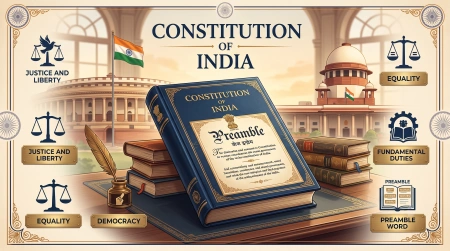
Constitution Of India
Test your knowledge of the Constitution of India, including its fundamental principles, ri...
View quizzes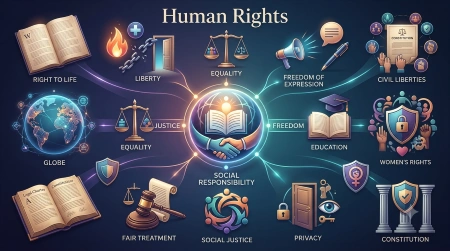
Human Rights
Human Rights quiz collection on MCQ Exam Test — free multiple choice quiz parts covering t...
View quizzes
Polity
Test your knowledge of the Indian Constitution, Parliament, fundamental rights, duties, go...
View quizzes
Information Technology ACT
Practice free MCQs on the IT Act 2000, digital signatures, cyber offences, Section 66A & i...
View quizzes