MCQ Exam Test
  • Current affairs
  • Educational Development
  • Competitive exams
  • About Us
  • Contact Us
  • © 2026 mcqexamtest. All rights reserved.

    • About Us
    • Contact Us
    • Privacy Policy
    • Terms & Conditions
    • FAQ
    1. Home
    2. →
    3. Food chain
    📚

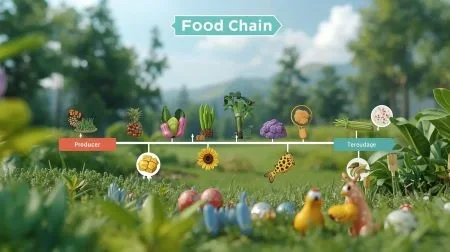
    Food chain

    This category offers a detailed exploration of the biological energy flow that sustains life on Earth, tracing the path from solar energy to apex predators. It dissects the roles of producers, consumers, and decomposers, and illustrates the delicate balance of food webs within various biomes. Learners will understand the concepts of trophic levels, energy loss, and the impact of keystone species on ecosystem stability. By highlighting the interdependence of all living organisms, this section underscores the importance of biodiversity and the catastrophic consequences of disrupting these natural cycles, promoting a conservationist mindset.

    Food chain

    Food chain

    Start Quiz
    0/4

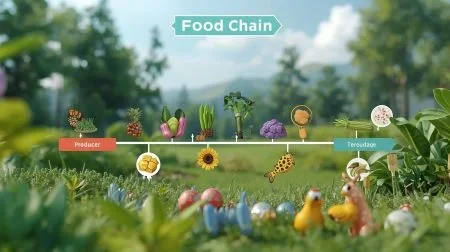
    Food Chain is a fundamental ecological concept that describes the sequential transfer of energy and nutrients from one organism to another within a biological community or ecosystem. It represents the feeding relationships between different organisms and illustrates how energy flows from its primary source — the sun — through a series of living organisms, each serving as food for the next. Every food chain begins with producers, passes through consumers of various levels, and ends with decomposers, forming a continuous cycle of energy transfer that sustains life on Earth. The food chain is structured into distinct trophic levels. Producers, also known as autotrophs, form the first trophic level and include green plants, algae, and phytoplankton, which convert solar energy into food through photosynthesis. Primary consumers, or herbivores — such as grasshoppers, rabbits, and deer — form the second level by feeding on producers. Secondary consumers, which are carnivores or omnivores like frogs, snakes, and small birds, feed on primary consumers. Tertiary consumers, such as eagles and large predators, occupy the top of the food chain. Decomposers such as bacteria and fungi break down dead organisms, returning nutrients to the soil and completing the nutrient cycle. Energy flow in a food chain follows the ten percent law, which states that only about 10% of the energy from one trophic level is transferred to the next, with the remaining 90% lost as heat during metabolic processes. This principle explains why food chains typically have only four to five trophic levels. In nature, food chains rarely exist in isolation but are interconnected through complex food webs, creating a network of feeding relationships within an ecosystem. Any disruption in a food chain — such as the extinction of a species or environmental pollution — can have cascading effects on the entire ecosystem. Understanding the food chain is essential for studying ecological balance, biodiversity conservation, and the sustainable management of natural resources.

    Explore More Categories

    Discover a wide range of quiz categories to test your knowledge and have fun!

    Accounting

    Accounting

    Test your knowledge of recording, analyzing, and managing financial transactions.

    Explore Category
    Science

    Science

    Includes Physics, Chemistry, Biology, and General Science for school and competitive exams.

    Explore Category
    General Knowledge

    General Knowledge

    General Knowledge is a broad understanding of diverse subjects, facts, and current events that enhances awareness and learning.

    Explore Category
    Agriculture

    Agriculture

    Test your knowledge of farming, crops, and livestock with this fun and educational Agriculture Quiz.

    Explore Category
    Law

    Law

    Covers legal principles, rights, justice, and the system that governs society.

    Explore Category