MCQ Exam Test
  • Current affairs
  • Educational Development
  • Competitive exams
  • About Us
  • Contact Us
  • © 2026 mcqexamtest. All rights reserved.

    • About Us
    • Contact Us
    • Privacy Policy
    • Terms & Conditions
    • FAQ
    1. Home
    2. →
    3. Science
    📚

    Science

    This category is dedicated to the systematic study of the natural universe through empirical observation, rigorous experimentation, and logical reasoning. It encompasses the core disciplines of physics, chemistry, and biology, offering a deep dive into the fundamental laws governing matter, energy, and life itself. Students will examine everything from subatomic particles to complex ecosystems, fostering a profound scientific literacy. By connecting theoretical principles with real-world phenomena, this section strengthens critical thinking skills and encourages a curiosity-driven approach to understanding the technological and environmental advancements shaping our daily lives.

    Human Health Disease

    Human Health Disease

    Start Quiz
    0/4

    Human Health and Disease is a vital area of study in biological and medical science that focuses on understanding the conditions necessary for maintaining a healthy human body and the various factors that lead to illness and disease. Human health is defined not merely as the absence of disease but as a state of complete physical, mental, and social well-being, as described by the World Health Organization (WHO). Maintaining good health requires a balanced diet, regular physical activity, adequate sleep, proper hygiene, and a stress-free mental state, all working together to keep the body functioning optimally. Diseases are broadly classified into two major categories — communicable and non-communicable diseases. Communicable diseases, such as tuberculosis, malaria, cholera, influenza, and COVID-19, are caused by infectious agents like bacteria, viruses, fungi, and parasites and can spread from one person to another through air, water, food, or direct contact. Non-communicable diseases, including diabetes, hypertension, cardiovascular diseases, and cancer, are caused by lifestyle factors, genetic predisposition, or environmental influences and are not transmitted between individuals. Both categories pose significant public health challenges worldwide. The human immune system serves as the body's primary defense mechanism against diseases, identifying and neutralizing harmful pathogens and foreign substances. Vaccines, antibiotics, and modern medical treatments have played a transformative role in controlling and eradicating many deadly diseases throughout history. However, emerging threats such as antibiotic resistance, new viral strains, and lifestyle-related disorders continue to challenge global health systems. Preventive healthcare, early diagnosis, public health education, and access to quality medical facilities are essential strategies for reducing the burden of disease. Understanding human health and disease empowers individuals to make informed lifestyle choices and contributes to building healthier, more resilient communities around the world.

    Biology

    Biology

    Start Quiz
    0/4

    Biology is the branch of natural science that deals with the study of life and living organisms, including their structure, function, growth, evolution, distribution, and taxonomy. It seeks to understand the complex mechanisms that govern all forms of life — from the tiniest microorganisms to the largest mammals on Earth. Biology is broadly divided into several sub-disciplines, including botany, zoology, microbiology, genetics, ecology, and physiology, each exploring different aspects of the living world.At its core, biology investigates how cells — the basic units of life — function and interact to form tissues, organs, and complete organisms. It explores how living beings reproduce, adapt, and respond to their environment over time through the process of evolution. The study of genetics and DNA has revolutionized our understanding of heredity and disease, opening new doors in medical research and biotechnology. Biology plays a crucial role in advancing human health, agriculture, environmental conservation, and pharmaceutical development. It helps scientists develop life-saving medicines, vaccines, and treatments for deadly diseases. Modern biology also addresses global challenges such as climate change, biodiversity loss, and food security. Whether studying the behavior of ecosystems or the molecular structure of proteins, biology remains one of the most fascinating and essential fields of science that deepens our understanding of life itself.

    Animal Kingdom

    Animal Kingdom

    Start Quiz
    0/4

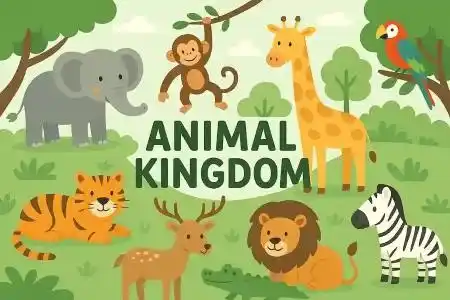
    Animal Kingdom is one of the most diverse and fascinating branches of biological science that deals with the study of animals — their classification, structure, behavior, evolution, and ecological roles. The animal kingdom, scientifically known as Animalia, encompasses millions of species ranging from microscopic invertebrates to massive blue whales, making it the largest and most varied kingdom among all living organisms on Earth. Animals are multicellular, eukaryotic organisms that obtain energy by consuming other organisms, distinguishing them from plants and other life forms.The animal kingdom is broadly classified into two major groups — Vertebrates and Invertebrates. Vertebrates include animals with a backbone, such as fish, amphibians, reptiles, birds, and mammals, while invertebrates — which make up nearly 95% of all animal species — include insects, worms, mollusks, and crustaceans. Each group is further divided based on body structure, reproduction, habitat, and physiological characteristics. This systematic classification helps scientists better understand the relationships and evolutionary history between different animal species across the globe.The study of the animal kingdom is essential for understanding biodiversity, ecological balance, and the functioning of natural ecosystems. Animals play critical roles as pollinators, decomposers, predators, and prey, maintaining the delicate balance of nature. Many animal species also hold significant economic, medicinal, and cultural importance for human civilization. However, rapid urbanization, deforestation, climate change, and poaching have pushed numerous species toward extinction. Conservation efforts and wildlife protection programs are therefore crucial to preserving the rich diversity of the animal kingdom for future generations.

    Zoology

    Zoology

    Start Quiz
    0/4

    Zoology is the branch of biological science dedicated to the systematic study of animals — their structure, physiology, behavior, classification, evolution, distribution, and ecological relationships. As one of the oldest and broadest divisions of biology, zoology encompasses an extraordinarily vast range of subject matter, from the microscopic anatomy of single-celled protozoa to the complex behavioral patterns of large mammals, and from the evolutionary history of ancient extinct species preserved in the fossil record to the conservation of endangered wildlife in the modern era. The word "zoology" is derived from the Greek words "zoion" meaning animal and "logos" meaning study, reflecting its fundamental purpose of understanding the animal kingdom in all its remarkable diversity and complexity. Zoology is organized into numerous specialized sub-disciplines, each focusing on specific groups of animals or particular aspects of animal biology. Entomology is the study of insects, the most species-rich group of animals on Earth. Ornithology focuses on birds, while ichthyology studies fish, herpetology covers reptiles and amphibians, and mammalogy deals with mammals. Invertebrate zoology examines the vast diversity of animals without backbones, including insects, mollusks, worms, and crustaceans, which constitute the overwhelming majority of all animal species. At the physiological level, animal physiology explores how organ systems function in different animal groups, while comparative anatomy examines structural similarities and differences across species to understand evolutionary relationships. Ethology, the study of animal behavior, investigates instinct, learning, communication, social organization, mating strategies, and ecological adaptations in animals across diverse environments. Zoology plays a vital role in advancing human knowledge in medicine, conservation biology, agriculture, and environmental science. The study of animal models in biomedical research has led to breakthroughs in understanding human diseases, developing pharmaceuticals, and testing medical treatments. Zoological research informs wildlife conservation programs, helping to protect endangered species and restore degraded habitats. In agriculture, zoology contributes to pest control, animal breeding, veterinary science, and aquaculture. Zoologists also play a crucial role in documenting and cataloging biodiversity, with many thousands of new animal species still being discovered each year, particularly in underexplored tropical and deep-sea environments. As the world faces a global biodiversity crisis driven by habitat loss, climate change, pollution, and overexploitation, the knowledge generated by zoological research is more important than ever in guiding efforts to preserve the extraordinary diversity of animal life that makes our planet uniquely and irreplacably rich.

    Virus and Bacteria

    Virus and Bacteria

    Start Quiz
    0/1

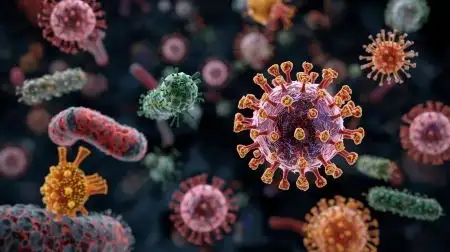
    Viruses and Bacteria are two of the most significant categories of microscopic biological entities that profoundly influence life on Earth, playing essential roles in ecological processes, human health, medicine, agriculture, and biotechnology. Despite their invisibility to the naked eye, viruses and bacteria collectively represent the most abundant and diverse forms of biological entities on the planet, existing in virtually every environment — from the deepest ocean trenches and volcanic hot springs to the human gut and the upper atmosphere. Understanding the nature, behavior, and impact of viruses and bacteria is one of the most important areas of scientific inquiry in biology and medicine, with profound implications for public health, disease prevention, and the development of life-saving treatments. Bacteria are single-celled prokaryotic microorganisms — meaning they lack a true membrane-bound nucleus — that are among the oldest and most successful forms of life on Earth, having existed for approximately 3.5 billion years. They come in three basic shapes — spherical (cocci), rod-shaped (bacilli), and spiral (spirilla) — and are found in virtually every habitat on the planet. While many bacteria are harmless or even beneficial — such as the gut microbiome bacteria that aid digestion, fix atmospheric nitrogen, decompose organic matter, and are used in the production of antibiotics, yogurt, and fermented foods — pathogenic bacteria cause a wide range of serious infectious diseases in humans, including tuberculosis, cholera, typhoid fever, pneumonia, and plague. Bacteria reproduce rapidly through binary fission, and their ability to develop antibiotic resistance through genetic mutation poses one of the most serious public health threats of the 21st century. Viruses, in contrast to bacteria, are not considered living organisms in the traditional sense, as they lack cellular structure, metabolic processes, and the ability to reproduce independently. A virus is essentially a microscopic package of genetic material — either DNA or RNA — enclosed within a protein coat called a capsid, and sometimes surrounded by a lipid envelope. Viruses are obligate intracellular parasites, meaning they can only replicate by invading host cells and hijacking their cellular machinery to produce copies of themselves. Viruses cause a vast array of diseases in humans, animals, and plants, including influenza, HIV/AIDS, hepatitis, measles, dengue fever, Ebola, and COVID-19. The global COVID-19 pandemic caused by the SARS-CoV-2 coronavirus, which began in late 2019, dramatically illustrated the devastating impact that viral diseases can have on human health, economies, and societies worldwide. Vaccines, antiviral drugs, and public health measures remain the primary tools for combating viral infections. Despite their pathogenic potential, viruses also play important ecological roles and have been harnessed in biotechnology for gene therapy, vaccine development, and cancer treatment, highlighting the complex and dual nature of these extraordinary biological entities.

    Plant Kingdom

    Plant Kingdom

    Start Quiz
    0/3

    Plant Kingdom encompasses all photosynthetic, multicellular, eukaryotic organisms that form the foundation of virtually every terrestrial and aquatic ecosystem on Earth. Scientifically classified under the kingdom Plantae, plants are an extraordinarily diverse group of living organisms ranging from microscopic mosses and delicate ferns to towering redwood trees and brilliantly colored flowering plants. With an estimated 390,000 known species and many more yet to be discovered, the plant kingdom represents one of the most species-rich and ecologically essential groups of organisms on the planet. Plants are unique among living organisms in their ability to manufacture their own food through the process of photosynthesis — converting sunlight, carbon dioxide, and water into glucose and oxygen — a process that forms the energetic foundation of nearly all food chains and is responsible for maintaining the oxygen-rich atmosphere that makes life on Earth possible. The plant kingdom is broadly classified into two major groups — non-vascular plants and vascular plants — based on the presence or absence of specialized tissue systems for conducting water and nutrients. Non-vascular plants, including mosses, liverworts, and hornworts, lack true roots, stems, and leaves and are typically found in moist environments. Vascular plants, which include the vast majority of plant species, possess specialized vascular tissues — xylem and phloem — that transport water, minerals, and organic nutrients throughout the plant body. Vascular plants are further divided into seedless vascular plants such as ferns and clubmosses, and seed-producing plants, which include gymnosperms (cone-bearing plants like pines and cycads) and angiosperms (flowering plants), the latter being the most diverse and evolutionarily successful group of plants on Earth, comprising over 80% of all known plant species. The plant kingdom is of immeasurable importance to human civilization and the natural world alike. Plants provide food, oxygen, medicine, timber, fiber, fuel, and countless other products that sustain human life and economic activity. Agriculture is entirely dependent on cultivated plant species, and the diversity of wild plant species provides the genetic resources necessary for developing new crop varieties. Many of the world's most important medicines — including aspirin, quinine, morphine, and numerous cancer-fighting compounds — are derived from plant species. Plants also play critical roles in regulating the global climate by absorbing carbon dioxide, preventing soil erosion through their root systems, maintaining the water cycle through transpiration, and providing habitat and food for millions of animal species. The study of plants, known as botany, continues to yield new discoveries of immense scientific, medical, and ecological value. However, rapid deforestation, habitat destruction, climate change, and the introduction of invasive species are threatening plant biodiversity at an alarming rate, making the conservation of the plant kingdom one of the most urgent environmental priorities of our time.

    Nervous System

    Nervous System

    Start Quiz
    0/3

    Nervous System is one of the most complex, sophisticated, and vital organ systems in the human body, responsible for receiving, processing, integrating, and transmitting information between different parts of the body, enabling coordinated responses to both internal and external stimuli. It serves as the body's master control and communication network, regulating virtually every physiological process — from heartbeat, breathing, and digestion to thought, emotion, memory, movement, and sensory perception. Without the nervous system, the body would be incapable of responding to its environment, maintaining homeostasis, or coordinating the activities of its organ systems, making it absolutely indispensable for survival, cognition, and behavior. The human nervous system is structurally divided into two major components — the Central Nervous System (CNS) and the Peripheral Nervous System (PNS). The Central Nervous System consists of the brain and the spinal cord, which together serve as the primary processing and command centers of the body. The brain, housed within the skull, is divided into the cerebrum, cerebellum, and brainstem, each responsible for distinct functions. The cerebrum governs higher cognitive functions such as thinking, reasoning, language, voluntary movement, and sensory processing. The cerebellum coordinates balance and fine motor control, while the brainstem regulates vital autonomic functions including respiration, heart rate, and digestion. The spinal cord serves as the main communication highway between the brain and the rest of the body, transmitting sensory and motor signals through reflex arcs and ascending and descending neural pathways. The Peripheral Nervous System includes all nerve fibers outside the CNS, connecting the brain and spinal cord to the muscles, organs, skin, and sensory receptors throughout the body. It is further divided into the somatic nervous system, which controls voluntary movements and transmits sensory information, and the autonomic nervous system, which regulates involuntary physiological processes. The autonomic nervous system is subdivided into the sympathetic nervous system — which activates the body's "fight or flight" response in stressful situations — and the parasympathetic nervous system — which promotes rest, digestion, and recovery. The basic functional unit of the nervous system is the neuron, a specialized cell that transmits electrical and chemical signals across synapses using neurotransmitters such as dopamine, serotonin, acetylcholine, and norepinephrine. Disorders of the nervous system, including Alzheimer's disease, Parkinson's disease, multiple sclerosis, epilepsy, stroke, and spinal cord injuries, represent some of the most debilitating and challenging medical conditions known to science. Advances in neuroscience, neuroimaging, and neuroprosthetics are continuously expanding our understanding of the nervous system and opening new frontiers in the treatment of neurological and psychiatric disorders, making it one of the most exciting and rapidly evolving fields of biomedical research today.

    Biodiversity

    Biodiversity

    Start Quiz
    0/4

    Biodiversity refers to the extraordinary variety of life on Earth, encompassing the diversity of genes, species, ecosystems, and ecological processes that collectively sustain the functioning of the natural world. The term, derived from the combination of "biological" and "diversity," was popularized in the 1980s and has since become one of the most important concepts in ecology, conservation biology, and environmental science. Biodiversity exists at three fundamental levels — genetic diversity, which refers to the variation in genetic information within and between populations of the same species; species diversity, which measures the variety and abundance of different species within a given area; and ecosystem diversity, which encompasses the range of habitats, biological communities, and ecological processes found across the planet. Together, these three dimensions of biodiversity represent the full richness and complexity of life that has evolved on Earth over billions of years.The importance of biodiversity to human well-being and the health of the planet cannot be overstated. Biodiverse ecosystems provide a vast range of ecosystem services upon which human civilization depends, including clean air and water, fertile soils, climate regulation, pollination of crops, natural pest control, flood mitigation, and the cycling of essential nutrients. The world's forests, wetlands, coral reefs, grasslands, and oceans each harbor unique assemblages of species that perform irreplaceable ecological functions. Biodiversity also holds immense economic value as the foundation of agriculture, fisheries, forestry, and the pharmaceutical industry — a significant proportion of modern medicines are derived from wild plant, animal, and microbial species. Furthermore, biodiversity carries profound cultural, aesthetic, spiritual, and recreational value for human societies around the world, enriching human experience and inspiring art, literature, and philosophy across cultures and civilizations.Despite its critical importance, biodiversity is currently facing an unprecedented global crisis, with species extinction rates estimated to be between one hundred and one thousand times higher than natural background rates, primarily due to human activities. Habitat destruction and fragmentation driven by deforestation, agricultural expansion, urban development, and infrastructure construction represent the leading threats to biodiversity worldwide. Climate change is increasingly disrupting species distributions, phenology, and ecological interactions, pushing many species beyond their adaptive limits. Overexploitation of wildlife and natural resources, pollution, and the spread of invasive alien species further compound the pressure on biodiversity. International frameworks such as the Convention on Biological Diversity (CBD), the Aichi Biodiversity Targets, and the Kunming-Montreal Global Biodiversity Framework represent global efforts to halt and reverse biodiversity loss. Protected areas, wildlife corridors, ecosystem restoration, sustainable land use practices, and community-based conservation initiatives are among the most effective strategies for preserving biodiversity. As the global community increasingly recognizes that healthy biodiversity is not merely a conservation goal but a fundamental prerequisite for human survival and sustainable development, protecting the diversity of life on Earth has emerged as one of the most urgent moral and scientific imperatives of the 21st century.

    Biophysics

    Biophysics

    Start Quiz
    0/5

    Biophysics is an interdisciplinary scientific field that applies the principles, theories, and mathematical methods of physics to understand the structure, function, dynamics, and interactions of biological systems at multiple scales — from individual molecules and cells to tissues, organs, and entire organisms. Bridging the traditionally separate worlds of physics and biology, biophysics seeks to explain the physical mechanisms underlying biological phenomena, using tools and concepts from classical mechanics, thermodynamics, electromagnetism, quantum mechanics, and statistical physics to unravel the extraordinary complexity of living systems. By bringing the quantitative rigor of physics to bear on biological questions, biophysics has produced some of the most profound insights in modern science, including the discovery of the double helix structure of DNA, the elucidation of ion channel function in nerve cells, and the development of powerful imaging techniques that have revolutionized our understanding of the molecular machinery of life. Biophysics encompasses a remarkably broad range of research areas and applications. At the molecular level, structural biophysics uses techniques such as X-ray crystallography, nuclear magnetic resonance (NMR) spectroscopy, and cryo-electron microscopy to determine the three-dimensional structures of proteins, nucleic acids, lipid membranes, and other biological macromolecules at atomic resolution — knowledge that is essential for understanding how these molecules perform their biological functions and for the rational design of new drugs and therapies. Membrane biophysics investigates the physical properties and functions of biological membranes, including the mechanisms of ion transport, signal transduction, and membrane fusion. Neurobiophysics applies physical principles to understand the electrical properties of neurons, the generation and propagation of action potentials, and the physical basis of synaptic transmission and neural computation. Biomechanics examines the mechanical properties of biological materials and the forces involved in movement, growth, and structural support at levels ranging from individual protein fibers to whole organisms. The practical applications of biophysics are wide-ranging and have had transformative impacts on medicine, biotechnology, and materials science. Medical imaging technologies — including X-ray radiography, computed tomography (CT), magnetic resonance imaging (MRI), and positron emission tomography (PET) — are all based on biophysical principles and have become indispensable tools in clinical diagnosis and biomedical research. Single-molecule biophysics techniques, including optical tweezers, atomic force microscopy, and fluorescence resonance energy transfer (FRET), allow scientists to observe and manipulate individual biological molecules in real time, providing unprecedented insights into molecular motors, DNA replication, protein folding, and enzymatic mechanisms. Biophysical research also contributes to the development of biosensors, drug delivery systems, prosthetics, and tissue-engineered organs. Computational biophysics uses molecular dynamics simulations and other modeling approaches to predict the behavior of biological systems at the atomic level, complementing experimental approaches. As the boundaries between physics, biology, chemistry, and engineering continue to blur in the era of nanoscience and systems biology, biophysics occupies an increasingly central and integrative role at the cutting edge of scientific discovery, driving innovations that have the potential to transform both our fundamental understanding of life and the practice of medicine.

    Botany

    Botany

    Start Quiz
    0/4

    Botany is the scientific study of plants — encompassing their structure, physiology, growth, reproduction, metabolism, development, diseases, chemical properties, evolutionary history, ecology, and classification. Also known as plant biology or plant science, botany is one of the oldest branches of natural science, with roots stretching back to ancient civilizations that relied on plants for food, medicine, and materials. The Greek philosopher Theophrastus, a student of Aristotle, is often regarded as the "Father of Botany" for his systematic descriptions and classifications of plants in ancient Greece. Over millennia, botany has evolved from simple plant identification and herbal medicine into a sophisticated and multidisciplinary science that intersects with genetics, biochemistry, ecology, evolutionary biology, and biotechnology to address fundamental questions about plant life and its relationship to human society and the natural world. The field of botany is organized into numerous specialized sub-disciplines, each examining different aspects of plant biology. Plant morphology studies the external forms and structures of plants, including roots, stems, leaves, flowers, fruits, and seeds. Plant anatomy examines the internal cellular and tissue organization of plant organs. Plant physiology investigates the biochemical and biophysical processes occurring within plants, including photosynthesis, respiration, transpiration, nutrient uptake, hormonal signaling, and responses to environmental stimuli such as light, gravity, and temperature. Plant ecology explores the relationships between plants and their biotic and abiotic environments, examining how plants compete for resources, interact with pollinators and herbivores, and contribute to ecosystem structure and function. Plant taxonomy and systematics focus on the identification, naming, classification, and evolutionary relationships of plant species, forming the foundation of botanical knowledge upon which all other sub-disciplines depend. Botany is of immense practical importance to human civilization and the health of the planet. Agriculture, which feeds the world's population, is entirely dependent on our botanical knowledge of crop plants — their growth requirements, nutritional composition, breeding potential, and susceptibility to pests and diseases. Ethnobotany documents the traditional knowledge of indigenous communities regarding the uses of plants for food, medicine, and cultural practices, preserving a vast repository of botanical wisdom accumulated over thousands of years. Plant-derived compounds form the basis of numerous pharmaceuticals, including pain relievers, heart medications, anticancer drugs, and antimalarials, making botanical research central to drug discovery and development. Forestry, horticulture, landscape design, and ecological restoration all draw upon botanical principles and knowledge. In the context of global environmental change, botany plays a crucial role in understanding how plant communities respond to rising temperatures, shifting precipitation patterns, elevated carbon dioxide levels, and habitat fragmentation. Plant conservation — particularly the preservation of wild plant genetic diversity in seed banks and botanical gardens — is vital for maintaining the raw materials needed for future crop improvement and ecosystem restoration. As global plant biodiversity faces unprecedented threats, the science of botany has never been more essential to the future of food security, human health, and the sustainability of Earth's ecosystems.

    Explore More Categories

    Discover a wide range of quiz categories to test your knowledge and have fun!

    Accounting

    Accounting

    Test your knowledge of recording, analyzing, and managing financial transactions.

    Explore Category
    Science

    Science

    Includes Physics, Chemistry, Biology, and General Science for school and competitive exams.

    Explore Category
    General Knowledge

    General Knowledge

    General Knowledge is a broad understanding of diverse subjects, facts, and current events that enhances awareness and learning.

    Explore Category
    Agriculture

    Agriculture

    Test your knowledge of farming, crops, and livestock with this fun and educational Agriculture Quiz.

    Explore Category
    Law

    Law

    Covers legal principles, rights, justice, and the system that governs society.

    Explore Category