5
Quizzes
Topic
Biophysics
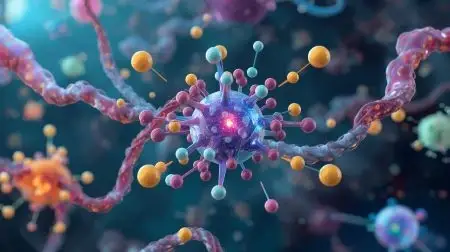
Biophysics is an interdisciplinary scientific field that applies the principles, theories, and mathematical methods of physics to understand the structure, function, dynamics, and interactions of biological systems at multiple scales — from individual molecules and cells to tissues, organs, and entire organisms. Bridgi...
125
Questions
4.5/ 5.0
No reviews yet
2
Learners
100% Free
Untimed & Flexible
About Biophysics
Biophysics is an interdisciplinary scientific field that applies the principles, theories, and mathematical methods of physics to understand the structure, function, dynamics, and interactions of biological systems at multiple scales — from individual molecules and cells to tissues, organs, and entire organisms. Bridging the traditionally separate worlds of physics and biology, biophysics seeks to explain the physical mechanisms underlying biological phenomena, using tools and concepts from classical mechanics, thermodynamics, electromagnetism, quantum mechanics, and statistical physics to unravel the extraordinary complexity of living systems. By bringing the quantitative rigor of physics to bear on biological questions, biophysics has produced some of the most profound insights in modern science, including the discovery of the double helix structure of DNA, the elucidation of ion channel function in nerve cells, and the development of powerful imaging techniques that have revolutionized our understanding of the molecular machinery of life. Biophysics encompasses a remarkably broad range of research areas and applications. At the molecular level, structural biophysics uses techniques such as X-ray crystallography, nuclear magnetic resonance (NMR) spectroscopy, and cryo-electron microscopy to determine the three-dimensional structures of proteins, nucleic acids, lipid membranes, and other biological macromolecules at atomic resolution — knowledge that is essential for understanding how these molecules perform their biological functions and for the rational design of new drugs and therapies. Membrane biophysics investigates the physical properties and functions of biological membranes, including the mechanisms of ion transport, signal transduction, and membrane fusion. Neurobiophysics applies physical principles to understand the electrical properties of neurons, the generation and propagation of action potentials, and the physical basis of synaptic transmission and neural computation. Biomechanics examines the mechanical properties of biological materials and the forces involved in movement, growth, and structural support at levels ranging from individual protein fibers to whole organisms. The practical applications of biophysics are wide-ranging and have had transformative impacts on medicine, biotechnology, and materials science. Medical imaging technologies — including X-ray radiography, computed tomography (CT), magnetic resonance imaging (MRI), and positron emission tomography (PET) — are all based on biophysical principles and have become indispensable tools in clinical diagnosis and biomedical research. Single-molecule biophysics techniques, including optical tweezers, atomic force microscopy, and fluorescence resonance energy transfer (FRET), allow scientists to observe and manipulate individual biological molecules in real time, providing unprecedented insights into molecular motors, DNA replication, protein folding, and enzymatic mechanisms. Biophysical research also contributes to the development of biosensors, drug delivery systems, prosthetics, and tissue-engineered organs. Computational biophysics uses molecular dynamics simulations and other modeling approaches to predict the behavior of biological systems at the atomic level, complementing experimental approaches. As the boundaries between physics, biology, chemistry, and engineering continue to blur in the era of nanoscience and systems biology, biophysics occupies an increasingly central and integrative role at the cutting edge of scientific discovery, driving innovations that have the potential to transform both our fundamental understanding of life and the practice of medicine.
Biophysics - Part 1
Not startedTest your grasp of Biophysics and explore how physics reveals the mysteries of living systems. (Part 1)
Start
Biophysics - Part 2
Not startedTest your grasp of Biophysics and explore how physics reveals the mysteries of living systems. (Part 2)
Start
Biophysics - Part 3
Not startedTest your grasp of Biophysics and explore how physics reveals the mysteries of living systems. (Part 3)
Start
Biophysics - Part 4
Not startedTest your grasp of Biophysics and explore how physics reveals the mysteries of living systems. (Part 4)
Start
Biophysics - Part 5
Not startedTest your grasp of Biophysics and explore how physics reveals the mysteries of living systems. (Part 5)
Start
No quizzes match your search.
Community feedback
What Learners Say About This Topic
Real reflections from learners who practiced Biophysics.
No approved reviews yet. Be the first to share your experience.
Format
Quiz Format & Structure
Each quiz is designed to comprehensively test your knowledge on the selected topic. Here's what you can expect:
All Questions Mandatory
You must answer all questions before submitting — no question can be left blank
Question Types
All questions are multiple choice with 4 options (A, B, C, D) where only one answer is correct
Quiz Length
Quizzes typically contain 10–25 questions depending on the category and difficulty
Equal Weightage
Each question carries equal marks for fair assessment of your knowledge
Review Option
Review all your answers before final submission to catch any mistakes
Question Locked
Cannot change or select another option after selection
Advice
Tips for Success
Read Questions Carefully
Take your time to read each question thoroughly. Since there's no time limit, make sure you understand what's being asked before selecting an answer.
Eliminate Wrong Options
If you're unsure, try eliminating options you know are incorrect. This increases your chances of selecting the right answer.
Trust Your First Instinct
Your first instinct is often correct. While you should be careful, avoid changing answers unless you're certain you made a mistake.
Review Before Submitting
Before hitting submit, review all your answers to ensure you haven't accidentally skipped any questions or made careless mistakes.
Learn from Mistakes
After viewing your results, take time to understand why you got certain questions wrong. This helps improve future performance.
Take Multiple Attempts
Don't worry about getting everything right the first time. Taking quizzes multiple times helps reinforce your knowledge.
Related topics
More in Science
Explore other sub topics and keep practicing across the subject.
Nervous System
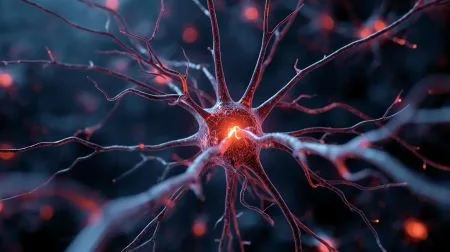
Study the structure and function of the brain, spinal cord, and nerves. Learn how signals...
View quizzes
Biodiversity
Understand the variety of life forms on Earth, including genetic, species, and ecosystem d...
View quizzes
Chemistry
Challenge your chemistry knowledge with engaging quiz questions covering atoms, molecules,...
View quizzes
Human Health Disease
Understand common and major diseases affecting humans, including causes, symptoms, prevent...
View quizzes