MCQ Exam Test
  • Current affairs
  • Educational Development
  • Competitive exams
  • About Us
  • Contact Us
  • © 2026 mcqexamtest. All rights reserved.

    • About Us
    • Contact Us
    • Privacy Policy
    • Terms & Conditions
    • FAQ
    1. Home
    2. →
    3. Commerce & Economics
    📚

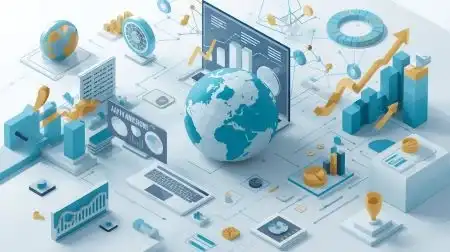
    Commerce & Economics

    This category provides the theoretical and practical framework for understanding how wealth is produced, distributed, and consumed. It spans microeconomics (individual choices) and macroeconomics (national policies), covering supply and demand, trade tariffs, and GDP growth. Learners will examine the mechanics of global markets, business cycles, and the impact of fiscal policies on society. This section strengthens analytical thinking regarding market trends and resource allocation, helping students comprehend the complex economic forces that drive prosperity, poverty, and development in nations around the world.

    Commerce

    Commerce

    Start Quiz
    0/4

    Commerce is a broad and dynamic field of study and practice encompassing all activities related to the exchange of goods, services, and resources between producers, traders, and consumers within a structured economic system. It forms one of the three traditional streams of academic education alongside science and humanities, providing students with a comprehensive understanding of business, trade, finance, accounting, economics, and management. Commerce examines how economic value is created, exchanged, and distributed through commercial transactions, market mechanisms, financial institutions, and trade networks at local, national, and global levels. From the earliest barter systems of ancient civilizations to the sophisticated digital marketplaces of the 21st century, commerce has been the driving force behind economic development, wealth creation, and the improvement of living standards across human societies.The study of commerce encompasses a diverse range of interrelated disciplines and subjects. Accountancy forms the financial backbone of commerce, providing systematic methods for recording, classifying, and analyzing financial transactions to generate accurate financial statements that reflect the economic health of business enterprises. Business studies examines the organization, management, and strategic operations of businesses across different sectors and scales. Economics provides the theoretical framework for understanding market behavior, resource allocation, price mechanisms, and the macroeconomic forces that shape commercial activity. Business law governs the legal framework within which commercial transactions occur, covering contracts, company law, consumer protection, intellectual property, and international trade regulations. Statistics and mathematics provide the quantitative tools for business analysis, financial modeling, and decision-making under uncertainty.Commerce plays a pivotal role in national economic development and international trade by facilitating the efficient allocation of resources, generating employment, promoting entrepreneurship, and creating wealth across economies. Domestic commerce encompasses all trade activities within a country's borders, including wholesale and retail trade, banking, insurance, transportation, and warehousing — the essential auxiliary services that support the smooth flow of goods and services from producers to consumers. International commerce involves the cross-border trade of goods and services, governed by trade agreements, tariffs, and international commercial law, and facilitated by institutions such as the World Trade Organization (WTO), the International Chamber of Commerce (ICC), and multinational banks. The digital revolution has fundamentally transformed commerce through the rise of e-commerce, digital payments, fintech innovations, and global supply chain management, creating entirely new business models and market opportunities. As globalization deepens and the pace of technological change accelerates, commerce continues to evolve rapidly, making a strong foundation in commercial education more valuable and relevant than ever for students, entrepreneurs, business professionals, and policymakers navigating the complex and interconnected global economy.

    E-Commerce

    E-Commerce

    Start Quiz
    0/4

    E-Commerce, or Electronic Commerce, refers to the buying and selling of goods, services, and information over digital networks — primarily the internet — enabling commercial transactions to be conducted electronically between businesses, consumers, and governments without the constraints of physical location or traditional business hours. Since its emergence in the mid-1990s, e-commerce has grown from a novelty to one of the most powerful and transformative forces in the global economy, fundamentally reshaping how consumers shop, how businesses operate, and how markets function across every industry and sector. The explosive growth of internet connectivity, mobile devices, digital payment systems, and logistics infrastructure has enabled e-commerce to reach billions of consumers worldwide, making it one of the fastest-growing and most dynamic sectors of the modern digital economy.E-commerce is broadly classified into several models based on the nature of the parties involved in the transaction. Business-to-Consumer (B2C) e-commerce, exemplified by platforms such as Amazon, Flipkart, and Myntra, involves businesses selling directly to individual consumers through online stores and marketplaces. Business-to-Business (B2B) e-commerce facilitates commercial transactions between businesses — such as manufacturers, wholesalers, and suppliers — typically involving larger order volumes and more complex transaction processes. Consumer-to-Consumer (C2C) platforms such as eBay and OLX enable individuals to sell goods and services directly to other individuals. Consumer-to-Business (C2B) models allow individuals to offer products or services to companies, as seen in freelance platforms and influencer marketing. Government-to-Consumer (G2C) and Government-to-Business (G2B) e-commerce refers to digital government services and procurement processes conducted online. Each model has distinct characteristics, revenue models, and operational requirements that reflect the diversity of the digital commercial ecosystem.The success of e-commerce is driven by several interconnected technological and business enablers, including secure online payment gateways, robust logistics and supply chain management, mobile commerce applications, artificial intelligence-powered recommendation engines, cloud computing infrastructure, and data analytics platforms. Social commerce — the integration of e-commerce with social media platforms — has emerged as a major new channel for product discovery and online shopping, particularly among younger consumers. The rapid growth of digital wallets, UPI payments, and buy-now-pay-later (BNPL) services has further lowered barriers to online purchasing. However, e-commerce also presents significant challenges including cybersecurity threats, data privacy concerns, the digital divide that excludes less connected populations, environmental impacts of packaging and delivery logistics, and the competitive pressures on traditional brick-and-mortar retailers. Regulatory frameworks governing e-commerce — including consumer protection laws, taxation of digital transactions, data localization requirements, and platform liability rules — are continuously evolving to address the unique challenges of the digital marketplace. In India, the e-commerce sector has grown exponentially, driven by increasing internet penetration, the proliferation of smartphones, and government initiatives such as Digital India. As technology continues to advance and consumer behavior evolves, e-commerce will remain at the forefront of commercial innovation, redefining the boundaries of trade, entrepreneurship, and economic participation in the interconnected digital world.

    Economics

    Economics

    Start Quiz
    0/4

    Economics is the social science that studies how individuals, businesses, governments, and societies allocate scarce resources to satisfy unlimited human wants and needs, analyzing the processes of production, distribution, consumption, and exchange of goods and services within economic systems. Often described as the study of choice under conditions of scarcity, economics provides a powerful analytical framework for understanding how prices are determined, how markets function, how wealth is created and distributed, how governments design fiscal and monetary policies, and how economies grow and fluctuate over time. As one of the most influential and widely studied academic disciplines, economics shapes public policy, business strategy, individual financial decisions, and international relations, making it indispensable for understanding the forces that govern the material dimensions of human civilization. Economics is traditionally divided into two major branches — microeconomics and macroeconomics — each operating at a different level of analysis. Microeconomics examines the behavior of individual economic actors — consumers, firms, workers, and investors — and studies how they make decisions in response to prices, incentives, and constraints. Core microeconomic concepts include supply and demand, price elasticity, consumer utility theory, production costs, market structures (perfect competition, monopoly, oligopoly, and monopolistic competition), and market failures such as externalities and public goods. Macroeconomics, in contrast, studies the economy as a whole, examining aggregate phenomena such as national income and output (GDP), inflation, unemployment, interest rates, exchange rates, international trade, and the impact of fiscal and monetary policies on overall economic performance. The tension between Keynesian and classical schools of macroeconomic thought — particularly regarding the role of government intervention in managing economic cycles — has been one of the defining intellectual debates in the history of economic science. Beyond its two core branches, economics encompasses a rich array of specialized sub-fields including development economics, which studies economic growth and poverty reduction in developing countries; behavioral economics, which integrates insights from psychology to understand how cognitive biases and emotions influence economic decision-making; environmental economics, which applies economic analysis to environmental problems such as pollution, resource depletion, and climate change; international economics, which examines trade, investment, and exchange rate dynamics between nations; and public economics, which analyzes government taxation, expenditure, and welfare policies. The tools of economic analysis — including mathematical modeling, econometrics, game theory, and experimental economics — have become increasingly sophisticated, enabling economists to test theories rigorously and provide evidence-based policy recommendations. In the contemporary era of globalization, technological disruption, growing inequality, and environmental crisis, economics has never been more relevant or consequential. Its insights continue to guide decisions at every level of society — from the household budget to the policies of central banks and international financial institutions — making it one of the most powerful and practically important intellectual disciplines of the modern age.

    Explore More Categories

    Discover a wide range of quiz categories to test your knowledge and have fun!

    Computer Science & IT

    Computer Science & IT

    Covers Programming, Data Structures, Algorithms, Databases, Web Development, Networking, and Cybersecurity.

    Explore Category
    General Knowledge

    General Knowledge

    General Knowledge is a broad understanding of diverse subjects, facts, and current events that enhances awareness and learning.

    Explore Category
    Science

    Science

    Includes Physics, Chemistry, Biology, and General Science for school and competitive exams.

    Explore Category
    Astrobiology

    Astrobiology

    Explore the science of life beyond Earth with our Astrobiology Quiz — test your knowledge of space, planets, and the search for alien life.

    Explore Category
    History

    History

    Play History quizzes and test your knowledge of world events, empires, and civilizations through fun and challenging MCQs.

    Explore Category