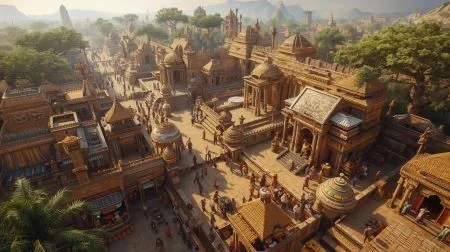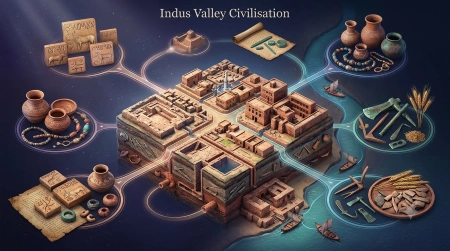
This category serves as a time machine, exploring the rise, glory, and eventual decline of the world's greatest societies. From ancient Mesopotamia to the modern industrial age, it examines cultural evolution, architectural marvels, governance models, and philosophical contributions. Learners will analyze how trade, war, and innovation have facilitated the exchange of ideas across borders. By studying the legacy of past ancestors and their solutions to societal problems, this section helps us understand the roots of modern traditions and the continuous narrative of human progress and resilience throughout history.

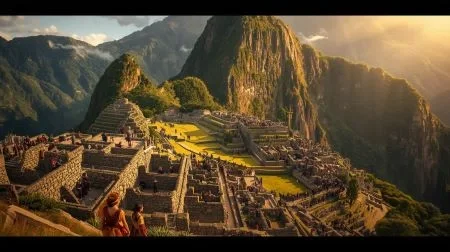
Incan Civilization was one of the most remarkable and powerful pre-Columbian civilizations in the Americas, flourishing primarily in the Andean region of South America between the 13th and 16th centuries CE. At its peak, the Inca Empire β known as Tawantinsuyu, meaning "The Four Regions" β was the largest empire in pre-Columbian America, stretching across what are today the countries of Peru, Ecuador, Bolivia, Chile, Argentina, and Colombia. The Inca people were extraordinarily skilled administrators, engineers, architects, and agriculturists, building one of the most sophisticated and organized societies the ancient world had ever seen without the use of a written language or wheeled vehicles. The Inca Empire was governed by a supreme ruler known as the Sapa Inca, who was regarded as a divine descendant of the sun god Inti. The empire was organized into four administrative regions, each overseen by governors appointed by the Sapa Inca, creating a highly centralized and efficient system of governance. The Incas developed an impressive road network known as the Qhapaq Γan β spanning over 40,000 kilometers across mountainous terrain β which facilitated communication, trade, and military movement throughout the empire. The quipu, a system of knotted strings, was used for record-keeping and communication in the absence of a conventional writing system. Agriculture was central to Incan society, with terraced farming systems called andenes enabling cultivation on steep Andean slopes and supporting a large population. The architectural achievements of the Inca civilization remain breathtaking even by modern standards. Machu Picchu, the legendary mountaintop citadel built in the 15th century, is perhaps the most iconic symbol of Incan ingenuity and is now recognized as one of the Seven Wonders of the Modern World. The Incas constructed massive stone structures using precisely cut stones fitted together without mortar, demonstrating extraordinary engineering skill. Their knowledge of astronomy, medicine, and textile weaving was also highly advanced. The Incan civilization came to an abrupt end with the arrival of Spanish conquistadors led by Francisco Pizarro in the 1530s, who exploited internal conflicts and used superior weaponry to conquer the empire. Despite its downfall, the legacy of the Incan civilization continues to inspire wonder and admiration, leaving behind a rich cultural heritage that remains central to the identity and pride of Andean communities today.

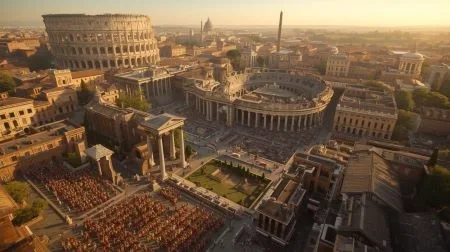
Roman Civilization stands as one of the greatest and most influential civilizations in the history of the world, whose legacy in law, governance, architecture, language, engineering, and culture continues to shape modern Western civilization and beyond. Emerging from the small city-state of Rome on the banks of the Tiber River in central Italy around the 8th century BCE, Roman civilization evolved through three major phases β the Roman Kingdom, the Roman Republic, and the Roman Empire β spanning over a thousand years of history. At its height, the Roman Empire encompassed vast territories stretching from the British Isles in the northwest to Mesopotamia in the east and North Africa in the south, governing millions of people across three continents. The Roman Republic, established around 509 BCE, introduced revolutionary concepts of governance including a Senate, elected magistrates, and a system of checks and balances that have profoundly influenced modern democratic and republican political systems. Roman law, codified in the Twelve Tables and later in the Corpus Juris Civilis under Emperor Justinian, formed the foundation of legal systems in many European and Latin American countries. The Roman military was one of the most formidable and disciplined fighting forces of the ancient world, enabling the conquest and administration of vast territories through its highly organized legions, superior tactics, and engineering capabilities. Great Roman leaders such as Julius Caesar, Augustus, Trajan, and Marcus Aurelius expanded and strengthened the empire through military conquest, diplomatic acumen, and administrative reforms. Roman civilization made extraordinary contributions to architecture and engineering that continue to inspire awe and admiration. The Romans pioneered the use of concrete, arches, vaults, and domes, constructing iconic structures such as the Colosseum, the Pantheon, aqueducts, roads, and public baths that demonstrated their mastery of engineering. The Latin language, spoken throughout the empire, gave rise to the Romance languages β including Italian, French, Spanish, Portuguese, and Romanian β and profoundly influenced the vocabulary of English and other European languages. Roman literature, philosophy, and art enriched the cultural heritage of the Western world, with writers such as Virgil, Ovid, Cicero, and Livy leaving timeless literary masterpieces. The decline and fall of the Western Roman Empire in 476 CE marked the end of antiquity and the beginning of the Middle Ages, but the enduring influence of Roman civilization on law, language, religion, governance, and culture remains one of humanity's greatest intellectual and historical legacies.

World Civilization refers to the collective study of the great human societies, cultures, empires, and intellectual traditions that have emerged and evolved across different regions of the world throughout history, shaping the political, social, economic, religious, and artistic fabric of human existence. From the earliest river valley civilizations of Mesopotamia, Egypt, the Indus Valley, and China to the classical empires of Greece, Rome, Persia, and India, and from the medieval kingdoms of Europe, Africa, and the Americas to the modern nation-states of the contemporary era, world civilization traces the extraordinary journey of humanity across thousands of years of progress, conflict, innovation, and cultural exchange. The study of world civilization encompasses the rise and fall of empires, the development of writing systems and languages, the evolution of religious and philosophical thought, the growth of trade and commerce, and the achievements of art, architecture, science, and technology across diverse cultures. Ancient Mesopotamia, often called the cradle of civilization, gave the world the first writing system β cuneiform β along with early systems of law, governance, and agriculture. Ancient Egypt produced monumental architecture and sophisticated religious traditions along the banks of the Nile. Greek civilization laid the intellectual foundations of Western philosophy, democracy, and scientific inquiry, while Roman civilization built a vast empire that spread law, engineering, and governance across Europe, the Middle East, and North Africa. World civilization also encompasses the contributions of non-Western cultures that are often underrepresented in traditional historical narratives. The Islamic Golden Age produced remarkable advances in mathematics, astronomy, medicine, and philosophy. The civilizations of sub-Saharan Africa developed complex kingdoms and trade networks, while the indigenous civilizations of the Americas β including the Aztec, Maya, and Inca β built sophisticated societies with advanced knowledge of astronomy, agriculture, and urban planning. The study of world civilization encourages cross-cultural understanding, historical empathy, and a recognition of the shared human heritage that transcends geographical boundaries. It provides essential context for understanding the modern world and the diverse civilizations that continue to shape our collective identity, values, and aspirations today.

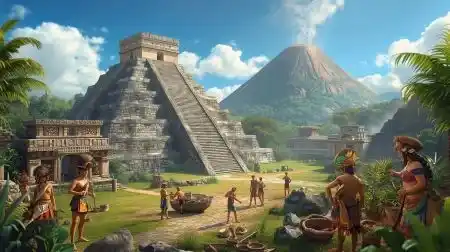
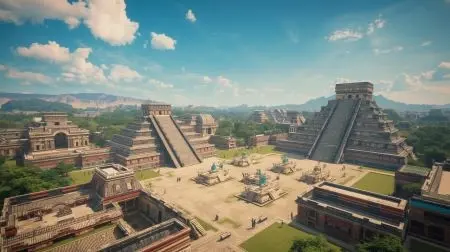
Mayan Civilization was one of the most sophisticated, intellectually advanced, and culturally rich civilizations of the ancient world, flourishing in the regions of present-day Mexico, Guatemala, Belize, Honduras, and El Salvador for over three thousand years. Spanning from approximately 2000 BCE to the arrival of Spanish conquistadors in the 16th century CE, the Maya developed a remarkable society characterized by extraordinary achievements in mathematics, astronomy, architecture, art, writing, and agriculture. Often considered the intellectual giants of the ancient Americas, the Maya created a complex and highly accurate calendar system, an intricate hieroglyphic writing system, and monumental stone cities that continue to astonish archaeologists and historians to this day. The Mayan civilization is typically divided into three major periods β the Preclassic, Classic, and Postclassic eras. The Classic period, spanning roughly from 250 CE to 900 CE, represented the peak of Mayan cultural and intellectual achievement, during which great city-states such as Tikal, Palenque, CopΓ‘n, and Chichen Itza flourished as centers of political power, religious practice, and artistic production. Each city-state was ruled by a divine king, known as the "ajaw," who served as a mediator between the gods and the people. The Maya built towering pyramid temples, elaborate palaces, ball courts, and astronomical observatories aligned with celestial events, reflecting their deep understanding of astronomy and their spiritual connection to the cosmos. The intellectual achievements of the Maya remain remarkable by any historical standard. They developed one of the only fully functional writing systems in the pre-Columbian Americas, using a combination of logograms and syllabic signs to record history, mythology, astronomical observations, and religious rituals on stone monuments, pottery, and folded bark paper books known as codices. Their mathematical system independently developed the concept of zero β a profound intellectual achievement β and their astronomical calculations of solar, lunar, and planetary cycles were astonishingly precise. Mayan agriculture was equally sophisticated, employing terracing, raised field systems, and irrigation to support large urban populations in challenging tropical environments. Although the Classic Maya experienced a dramatic collapse around 900 CE due to a combination of warfare, drought, deforestation, and political instability, Mayan culture did not disappear entirely. Millions of Maya descendants continue to live in Mesoamerica today, preserving their ancestral languages, traditions, and cultural identity as a living testament to one of humanity's greatest civilizations.

African Civilization represents one of the oldest, most diverse, and most historically significant chapters in the story of human development, encompassing thousands of years of cultural achievement, political organization, intellectual innovation, and artistic expression across the vast and varied continent of Africa. Africa is widely recognized as the birthplace of humanity, with the earliest evidence of Homo sapiens discovered in the continent's eastern regions, making it the cradle of all human civilization. Far from being a continent without history β as colonial-era narratives falsely portrayed β Africa was home to some of the world's most powerful and sophisticated empires, kingdoms, and trading civilizations that flourished long before and alongside the great civilizations of Europe and Asia. Ancient Egypt, located in northeastern Africa along the fertile banks of the Nile River, is perhaps the most well-known of all African civilizations and one of the greatest in world history. For over three thousand years, ancient Egypt produced remarkable achievements in architecture, mathematics, medicine, art, religion, and governance, constructing iconic monuments such as the Great Pyramids of Giza, the Sphinx, and the temples of Luxor and Karnak. South of Egypt, the ancient Kingdom of Kush β also known as Nubia β developed its own sophisticated civilization with its own pyramids, script, and powerful rulers who at one point conquered and governed all of Egypt. In West Africa, great empires such as the Ghana Empire, the Mali Empire, and the Songhai Empire controlled vast trans-Saharan trade networks, accumulating enormous wealth through the trade of gold, salt, and ivory. The Mali Empire, under the legendary ruler Mansa Musa β one of the richest individuals in human history β became a beacon of Islamic learning and culture, with the city of Timbuktu emerging as a world-renowned center of scholarship and trade. In East Africa, the Kingdom of Aksum in present-day Ethiopia developed into one of the most powerful trading empires of the ancient world, minting its own coins and erecting towering stone obelisks as symbols of its greatness. The East African coastal city-states β including Kilwa, Mombasa, and Zanzibar β flourished as major centers of the Indian Ocean trade network, connecting Africa to Arabia, Persia, India, and China. In Central and Southern Africa, the Great Zimbabwe civilization built impressive stone enclosures and developed extensive trade networks across the region. African civilizations also made profound contributions to religion, philosophy, oral literature, music, textile arts, and metallurgy, many of which influenced cultures far beyond the continent's borders. The transatlantic slave trade and European colonialism in later centuries caused immense suffering and disrupted the natural development of African societies, but the continent's rich civilizational heritage endures as a source of immense pride, scholarly interest, and cultural identity for Africans and people of African descent worldwide.

Aztec Civilization was one of the most powerful, sophisticated, and culturally vibrant civilizations of pre-Columbian Mesoamerica, flourishing in the central region of present-day Mexico from the 14th to the early 16th century CE. The Aztecs, also known as the Mexica, rose from humble origins as a nomadic tribe to build one of the largest and most formidable empires of the ancient Americas, with their magnificent capital city of Tenochtitlan β built on an island in the middle of Lake Texcoco β becoming one of the largest and most impressive urban centers in the world at its height. At its peak, the Aztec Empire encompassed a vast territory spanning much of central and southern Mexico, governing millions of people through a complex system of tribute, military alliance, and political control. The Aztec civilization was characterized by a remarkably complex social structure, rich religious life, sophisticated agricultural practices, and extraordinary artistic and architectural achievements. Aztec society was hierarchically organized, with the emperor β known as the tlatoani β at the apex, followed by nobles, priests, warriors, merchants, artisans, commoners, and slaves. Religion was central to Aztec life, with a complex pantheon of gods including Huitzilopochtli, the sun and war god, Quetzalcoatl, the feathered serpent deity, and Tlaloc, the rain god. Religious ceremonies, festivals, and rituals β including the controversial practice of human sacrifice, which the Aztecs believed was necessary to sustain the sun and maintain cosmic order β were integral to their spiritual worldview. The Aztec calendar system consisted of two interlocking cycles β the 365-day solar calendar and the 260-day ritual calendar β reflecting their deep understanding of astronomy and timekeeping. Aztec agricultural innovation was equally impressive, most notably the development of chinampas β artificial floating islands constructed in the shallow lake beds surrounding Tenochtitlan β which enabled highly productive farming in an otherwise inhospitable environment and supported the dense urban population of the capital. The Aztecs also built an extensive road network, a sophisticated market system centered on the great marketplace of Tlatelolco, and impressive architectural structures including towering pyramid temples such as the Templo Mayor in Tenochtitlan. Their system of education was remarkably inclusive, with mandatory schooling for both boys and girls regardless of social class β an achievement that stood in contrast to many contemporary civilizations. The Aztec Empire came to a dramatic and violent end with the arrival of Spanish conquistador HernΓ‘n CortΓ©s in 1519, who formed alliances with rival indigenous groups and, aided by devastating epidemics of European diseases to which the indigenous population had no immunity, conquered Tenochtitlan in 1521. Despite the destruction of their empire, the legacy of the Aztec civilization endures powerfully in Mexican culture, identity, art, language, and national consciousness, making it one of the most celebrated and studied civilizations in the history of the Americas.
Discover a wide range of quiz categories to test your knowledge and have fun!

Test your knowledge of recording, analyzing, and managing financial transactions.

Includes Physics, Chemistry, Biology, and General Science for school and competitive exams.

General Knowledge is a broad understanding of diverse subjects, facts, and current events that enhances awareness and learning.

Test your knowledge of farming, crops, and livestock with this fun and educational Agriculture Quiz.

Covers legal principles, rights, justice, and the system that governs society.