MCQ Exam Test
  • Current affairs
  • Educational Development
  • Competitive exams
  • About Us
  • Contact Us
  • © 2026 mcqexamtest. All rights reserved.

    • About Us
    • Contact Us
    • Privacy Policy
    • Terms & Conditions
    • FAQ
    1. Home
    2. →
    3. Science
    4. →
    5. Virus and Bacteria
    Virus and Bacteria

    Virus and Bacteria

    Viruses and Bacteria are two of the most significant categories of microscopic biological entities that profoundly influence life on Earth, playing essential roles in ecological processes, human health, medicine, agriculture, and biotechnology. Despite their invisibility to the naked eye, viruses and bacteria collectively represent the most abundant and diverse forms of biological entities on the planet, existing in virtually every environment — from the deepest ocean trenches and volcanic hot springs to the human gut and the upper atmosphere. Understanding the nature, behavior, and impact of viruses and bacteria is one of the most important areas of scientific inquiry in biology and medicine, with profound implications for public health, disease prevention, and the development of life-saving treatments. Bacteria are single-celled prokaryotic microorganisms — meaning they lack a true membrane-bound nucleus — that are among the oldest and most successful forms of life on Earth, having existed for approximately 3.5 billion years. They come in three basic shapes — spherical (cocci), rod-shaped (bacilli), and spiral (spirilla) — and are found in virtually every habitat on the planet. While many bacteria are harmless or even beneficial — such as the gut microbiome bacteria that aid digestion, fix atmospheric nitrogen, decompose organic matter, and are used in the production of antibiotics, yogurt, and fermented foods — pathogenic bacteria cause a wide range of serious infectious diseases in humans, including tuberculosis, cholera, typhoid fever, pneumonia, and plague. Bacteria reproduce rapidly through binary fission, and their ability to develop antibiotic resistance through genetic mutation poses one of the most serious public health threats of the 21st century. Viruses, in contrast to bacteria, are not considered living organisms in the traditional sense, as they lack cellular structure, metabolic processes, and the ability to reproduce independently. A virus is essentially a microscopic package of genetic material — either DNA or RNA — enclosed within a protein coat called a capsid, and sometimes surrounded by a lipid envelope. Viruses are obligate intracellular parasites, meaning they can only replicate by invading host cells and hijacking their cellular machinery to produce copies of themselves. Viruses cause a vast array of diseases in humans, animals, and plants, including influenza, HIV/AIDS, hepatitis, measles, dengue fever, Ebola, and COVID-19. The global COVID-19 pandemic caused by the SARS-CoV-2 coronavirus, which began in late 2019, dramatically illustrated the devastating impact that viral diseases can have on human health, economies, and societies worldwide. Vaccines, antiviral drugs, and public health measures remain the primary tools for combating viral infections. Despite their pathogenic potential, viruses also play important ecological roles and have been harnessed in biotechnology for gene therapy, vaccine development, and cancer treatment, highlighting the complex and dual nature of these extraordinary biological entities.
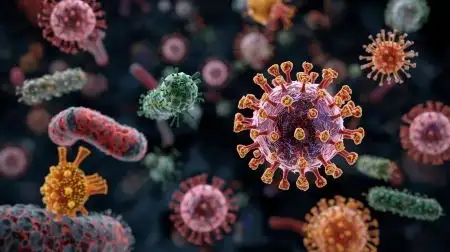
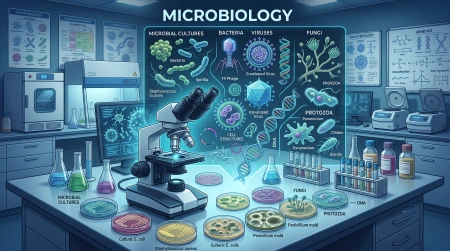
    Understand the structure, reproduction, and differences between viruses and bacteria. Learn about infections, immunity, and disease prevention. This category explains microorganisms and their impact on human health.

    Virus and Bacteria

    25 Questions
    📝

    Quiz Format & Structure

    Each quiz is designed to comprehensively test your knowledge on the selected topic. Here's what you can expect:

    ⚠️
    All Questions Mandatory

    You must answer all questions before submitting - no question can be left blank

    📋
    Question Types

    All questions are multiple choice with 4 options (A, B, C, D) where only one answer is correct

    🔢
    Quiz Length

    Quizzes typically contain 10-25 questions depending on the category and difficulty

    💯
    Equal Weightage

    Each question carries equal marks for fair assessment of your knowledge

    🔄
    Review Option

    Review all your answers before final submission to catch any mistakes

    🔒
    Question Locked

    cannot change or select another option after selection

    💡

    Tips for Success

    1. Read Questions Carefully

    Take your time to read each question thoroughly. Since there's no time limit, make sure you understand what's being asked before selecting an answer.

    2. Eliminate Wrong Options

    If you're unsure, try eliminating options you know are incorrect. This increases your chances of selecting the right answer.

    3. Don't Second-Guess Too Much

    Your first instinct is often correct. While you should be careful, avoid changing answers unless you're certain you made a mistake.

    4. Review Before Submitting

    Before hitting submit, review all your answers to ensure you haven't accidentally skipped any questions or made careless mistakes.

    5. Learn from Mistakes

    After viewing your results, take time to understand why you got certain questions wrong. This helps improve future performance.

    6. Take Multiple Attempts

    Don't worry about getting everything right the first time. Taking quizzes multiple times helps reinforce your knowledge.

    Explore More SubCategories Science

    Explore more subcategories and test your knowledge!

    Human Health Disease

    Human Health Disease

    Understand common and major diseases affecting humans, including causes, symptoms, prevention, and treatment methods. Learn about infectious and non-infectious diseases, immunity, and healthcare practices. This category promotes awareness about maintaining good health and disease prevention.

    Start Quiz
    Plant Kingdom

    Plant Kingdom

    Explore the classification, structure, and life processes of plants. Learn about photosynthesis, reproduction, and plant adaptations. This category highlights the importance of plants in ecosystems and human survival.

    Start Quiz
    Biology

    Biology

    Biology is the scientific study of life and living organisms, examining their structure, function, growth, evolution, and distribution. It covers everything from microscopic bacteria to complex ecosystems. Core, interconnected fields include genetics, ecology, and cell biology, which help explain how organisms function, interact with their environment, and evolve over time.

    Start Quiz
    Animal Kingdom

    Animal Kingdom

    Explore the fascinating world of animals, from microscopic organisms to complex mammals. Learn about classification, habitats, adaptations, food chains, and unique characteristics of different species. This category helps you understand biodiversity and the vital role animals play in maintaining ecological balance.

    Start Quiz