MCQ Exam Test
  • Current affairs
  • Educational Development
  • Competitive exams
  • About Us
  • Contact Us
  • Β© 2026 mcqexamtest. All rights reserved.

    • About Us
    • Contact Us
    • Privacy Policy
    • Terms & Conditions
    • FAQ
    1. Home
    2. β†’
    3. Earth Science
    πŸ“š

    Earth Science

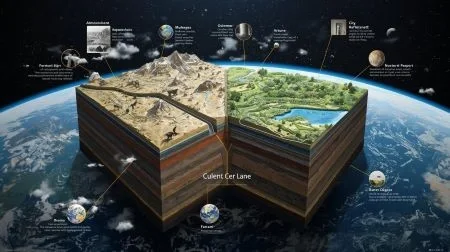
    Earth Science is an in-depth study of the physical constitution and dynamic processes of our planet. This category encompasses geology, meteorology, oceanography, and astronomy to explain how the Earth functions as a system. Students will explore the formation of rocks and minerals, the mechanics of plate tectonics, the causes of natural disasters like earthquakes, and the complexities of atmospheric weather patterns. This section helps learners appreciate the geological history of the Earth and the natural forces that continue to shape our landscapes, providing a scientific basis for understanding environmental challenges and resource management.

    Earth Science

    Earth Science

    Start Quiz
    0/4

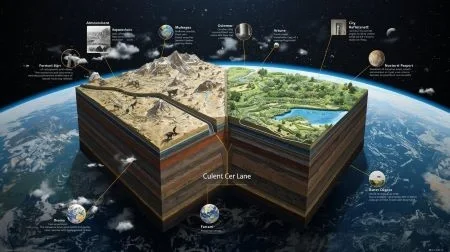
    Earth Science is a broad and comprehensive branch of science that encompasses the study of the Earth β€” its physical structure, composition, processes, history, and its place within the solar system and the universe. Also known as geoscience, it integrates several scientific disciplines including geology, meteorology, oceanography, astronomy, and environmental science to provide a complete understanding of how the Earth functions as a dynamic and ever-changing planetary system. Earth science seeks to explain natural phenomena such as earthquakes, volcanic eruptions, weather patterns, ocean currents, and the formation of mountains and continents through billions of years of geological and climatic processes.Geology, one of the core branches of earth science, studies the solid Earth β€” its rocks, minerals, tectonic plates, and geological history. It investigates the processes of rock formation, erosion, sedimentation, and metamorphism, as well as the movement of tectonic plates that causes earthquakes and volcanic activity. Meteorology focuses on the atmosphere, studying weather patterns, climate systems, and atmospheric phenomena such as hurricanes, tornadoes, and monsoons. Oceanography explores the world's oceans, examining ocean currents, marine ecosystems, tidal patterns, and the role of oceans in regulating the Earth's climate. Astronomy, as part of earth science, places the Earth in its cosmic context, studying its relationship with the sun, moon, and other celestial bodies.Earth science has immense practical significance in areas such as natural disaster prediction and mitigation, mineral and energy resource exploration, environmental monitoring, climate change research, and land use planning. Understanding plate tectonics helps scientists predict seismic activity and volcanic eruptions, while knowledge of atmospheric science is critical for accurate weather forecasting and climate modeling. Earth scientists also play a crucial role in identifying fossil fuel deposits, groundwater reserves, and renewable energy sources. As humanity faces growing environmental challenges, earth science provides the foundational knowledge necessary to understand the planet's systems, predict future changes, and develop strategies for sustainable interaction with the natural world. It remains one of the most essential and applied sciences of our time.

    Geology

    Geology

    Start Quiz
    0/4

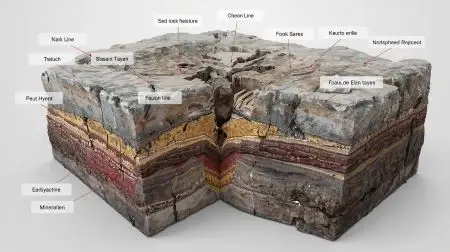
    Geology is the scientific study of the Earth β€” its physical structure, composition, internal processes, surface features, and the history of its formation and transformation over billions of years. Derived from the Greek words "geo" meaning Earth and "logos" meaning study, geology is one of the oldest and most foundational branches of earth science, providing essential insights into the materials that make up our planet, the forces that shape its surface and interior, and the dynamic processes that have continuously transformed the Earth throughout its 4.5-billion-year history. Geology draws upon principles from physics, chemistry, biology, and mathematics to investigate phenomena ranging from the crystalline structure of minerals and the formation of rocks to the movement of tectonic plates, the eruption of volcanoes, and the deposition of sedimentary layers that preserve the fossil record of ancient life.Geology is organized into several major sub-disciplines that collectively address the full complexity of Earth's physical systems. Mineralogy studies the chemical composition, crystal structure, and physical properties of minerals β€” the building blocks of rocks. Petrology examines the origin, composition, and classification of rocks, which are broadly categorized into three types β€” igneous, sedimentary, and metamorphic β€” based on how they are formed. Structural geology investigates the deformation of rocks and the formation of geological structures such as folds, faults, and mountain ranges resulting from tectonic forces. Stratigraphy studies the layering of rock sequences to reconstruct the geological history of regions and establish relative chronologies of past events. Geomorphology examines the processes that shape the Earth's surface landforms, including erosion, weathering, glaciation, and fluvial activity. Historical geology reconstructs the 4.5-billion-year history of the Earth through the interpretation of rock records, fossil evidence, and radiometric dating techniques.Geology has immense practical significance in numerous fields of human activity. The exploration and extraction of mineral resources, fossil fuels, and groundwater depend critically on geological knowledge and mapping. Understanding plate tectonics and fault systems is essential for assessing seismic hazards and designing earthquake-resistant infrastructure in vulnerable regions. Volcanology, a branch of geology, helps predict volcanic eruptions and mitigate their devastating impacts on human populations. Geological surveys inform urban planning, dam construction, tunnel engineering, and land use decisions by identifying potential geohazards such as landslides, subsidence, and liquefaction. In the context of climate change, geology provides crucial insights into past climate conditions through the study of ice cores, sediment records, and ancient atmospheric proxies, helping scientists model future climate scenarios. The discovery of critical minerals essential for renewable energy technologies β€” including lithium, cobalt, and rare earth elements β€” has made economic geology more important than ever in supporting the global transition to sustainable energy. As humanity faces growing challenges related to natural disasters, resource scarcity, and environmental change, geology remains one of the most vital and applied sciences for understanding and managing our dynamic planet.

    Explore More Categories

    Discover a wide range of quiz categories to test your knowledge and have fun!

    Accounting

    Accounting

    Test your knowledge of recording, analyzing, and managing financial transactions.

    Explore Category
    Science

    Science

    Includes Physics, Chemistry, Biology, and General Science for school and competitive exams.

    Explore Category
    General Knowledge

    General Knowledge

    General Knowledge is a broad understanding of diverse subjects, facts, and current events that enhances awareness and learning.

    Explore Category
    Agriculture

    Agriculture

    Test your knowledge of farming, crops, and livestock with this fun and educational Agriculture Quiz.

    Explore Category
    Law

    Law

    Covers legal principles, rights, justice, and the system that governs society.

    Explore Category