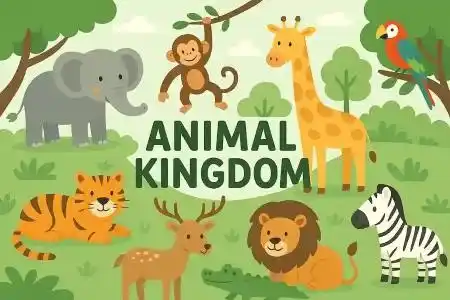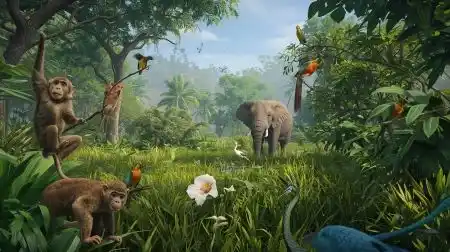
This category invites learners into the diverse and fascinating kingdom of animals, covering everything from microscopic invertebrates to majestic mammals. It explores zoological concepts such as taxonomy, evolutionary adaptations, ethology (animal behavior), and habitat requirements. Learners will investigate how different species survive in extreme environments and their roles in maintaining ecological equilibrium. This section also addresses the pressing issues of endangered species and wildlife conservation, aiming to build empathy and a scientific appreciation for the complex lives of the creatures with whom we share our planet.

Animal Kingdom is one of the most diverse and fascinating branches of biological science that deals with the study of animals — their classification, structure, behavior, evolution, and ecological roles. The animal kingdom, scientifically known as Animalia, encompasses millions of species ranging from microscopic invertebrates to massive blue whales, making it the largest and most varied kingdom among all living organisms on Earth. Animals are multicellular, eukaryotic organisms that obtain energy by consuming other organisms, distinguishing them from plants and other life forms.The animal kingdom is broadly classified into two major groups — Vertebrates and Invertebrates. Vertebrates include animals with a backbone, such as fish, amphibians, reptiles, birds, and mammals, while invertebrates — which make up nearly 95% of all animal species — include insects, worms, mollusks, and crustaceans. Each group is further divided based on body structure, reproduction, habitat, and physiological characteristics. This systematic classification helps scientists better understand the relationships and evolutionary history between different animal species across the globe.The study of the animal kingdom is essential for understanding biodiversity, ecological balance, and the functioning of natural ecosystems. Animals play critical roles as pollinators, decomposers, predators, and prey, maintaining the delicate balance of nature. Many animal species also hold significant economic, medicinal, and cultural importance for human civilization. However, rapid urbanization, deforestation, climate change, and poaching have pushed numerous species toward extinction. Conservation efforts and wildlife protection programs are therefore crucial to preserving the rich diversity of the animal kingdom for future generations.

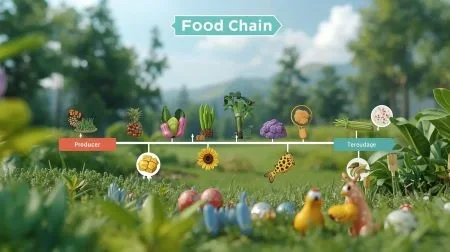
Food Chain is a fundamental ecological concept that describes the sequential transfer of energy and nutrients from one organism to another within a biological community or ecosystem. It represents the feeding relationships between different organisms and illustrates how energy flows from its primary source — the sun — through a series of living organisms, each serving as food for the next. Every food chain begins with producers, passes through consumers of various levels, and ends with decomposers, forming a continuous cycle of energy transfer that sustains life on Earth. The food chain is structured into distinct trophic levels. Producers, also known as autotrophs, form the first trophic level and include green plants, algae, and phytoplankton, which convert solar energy into food through photosynthesis. Primary consumers, or herbivores — such as grasshoppers, rabbits, and deer — form the second level by feeding on producers. Secondary consumers, which are carnivores or omnivores like frogs, snakes, and small birds, feed on primary consumers. Tertiary consumers, such as eagles and large predators, occupy the top of the food chain. Decomposers such as bacteria and fungi break down dead organisms, returning nutrients to the soil and completing the nutrient cycle. Energy flow in a food chain follows the ten percent law, which states that only about 10% of the energy from one trophic level is transferred to the next, with the remaining 90% lost as heat during metabolic processes. This principle explains why food chains typically have only four to five trophic levels. In nature, food chains rarely exist in isolation but are interconnected through complex food webs, creating a network of feeding relationships within an ecosystem. Any disruption in a food chain — such as the extinction of a species or environmental pollution — can have cascading effects on the entire ecosystem. Understanding the food chain is essential for studying ecological balance, biodiversity conservation, and the sustainable management of natural resources.

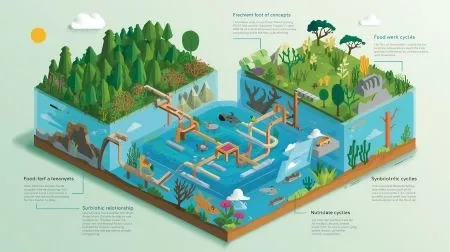
Ecology is the scientific study of the relationships and interactions between living organisms and their physical environment, forming one of the most fundamental and comprehensive branches of biological science. It seeks to understand how organisms — including plants, animals, fungi, and microorganisms — interact with each other and with their surrounding abiotic environment, which includes factors such as sunlight, temperature, water, soil, and atmospheric gases. Ecology examines life at multiple levels of organization, from individual organisms and populations to communities, ecosystems, biomes, and the entire biosphere, providing a holistic understanding of the natural world and the complex web of dependencies that sustain all life on Earth.The field of ecology is organized into several interconnected sub-disciplines. Population ecology studies the dynamics of individual species populations, including their size, density, distribution, and the factors that cause them to grow, decline, or fluctuate over time. Community ecology examines the interactions between different species within a shared habitat, including predation, competition, symbiosis, parasitism, and mutualism. Ecosystem ecology focuses on the flow of energy and the cycling of nutrients through biological communities and their physical environments, studying processes such as photosynthesis, decomposition, and the carbon and nitrogen cycles. Landscape ecology and global ecology address large-scale spatial patterns and the interactions between ecosystems across continents and the entire planet, increasingly important in the context of climate change and global biodiversity loss.Ecology has immense practical significance in addressing some of the most critical environmental challenges of our time. It provides the scientific foundation for conservation biology, wildlife management, habitat restoration, and the design of nature reserves and protected areas. Ecological principles guide sustainable agriculture, forestry, fisheries management, and urban planning, helping societies use natural resources without depleting them. The concept of ecosystem services — the benefits that healthy ecosystems provide to humanity, including clean air, clean water, fertile soils, and climate regulation — underscores the economic and social value of preserving natural environments. As biodiversity loss, habitat destruction, invasive species, and climate change increasingly threaten the stability of the world's ecosystems, ecology has become one of the most urgently important scientific disciplines of the 21st century, providing the knowledge and tools necessary to protect and sustain the natural systems upon which all life, including human civilization, ultimately depends.

Zoology is the branch of biological science dedicated to the systematic study of animals — their structure, physiology, behavior, classification, evolution, distribution, and ecological relationships. As one of the oldest and broadest divisions of biology, zoology encompasses an extraordinarily vast range of subject matter, from the microscopic anatomy of single-celled protozoa to the complex behavioral patterns of large mammals, and from the evolutionary history of ancient extinct species preserved in the fossil record to the conservation of endangered wildlife in the modern era. The word "zoology" is derived from the Greek words "zoion" meaning animal and "logos" meaning study, reflecting its fundamental purpose of understanding the animal kingdom in all its remarkable diversity and complexity. Zoology is organized into numerous specialized sub-disciplines, each focusing on specific groups of animals or particular aspects of animal biology. Entomology is the study of insects, the most species-rich group of animals on Earth. Ornithology focuses on birds, while ichthyology studies fish, herpetology covers reptiles and amphibians, and mammalogy deals with mammals. Invertebrate zoology examines the vast diversity of animals without backbones, including insects, mollusks, worms, and crustaceans, which constitute the overwhelming majority of all animal species. At the physiological level, animal physiology explores how organ systems function in different animal groups, while comparative anatomy examines structural similarities and differences across species to understand evolutionary relationships. Ethology, the study of animal behavior, investigates instinct, learning, communication, social organization, mating strategies, and ecological adaptations in animals across diverse environments. Zoology plays a vital role in advancing human knowledge in medicine, conservation biology, agriculture, and environmental science. The study of animal models in biomedical research has led to breakthroughs in understanding human diseases, developing pharmaceuticals, and testing medical treatments. Zoological research informs wildlife conservation programs, helping to protect endangered species and restore degraded habitats. In agriculture, zoology contributes to pest control, animal breeding, veterinary science, and aquaculture. Zoologists also play a crucial role in documenting and cataloging biodiversity, with many thousands of new animal species still being discovered each year, particularly in underexplored tropical and deep-sea environments. As the world faces a global biodiversity crisis driven by habitat loss, climate change, pollution, and overexploitation, the knowledge generated by zoological research is more important than ever in guiding efforts to preserve the extraordinary diversity of animal life that makes our planet uniquely and irreplacably rich.

Biodiversity refers to the extraordinary variety of life on Earth, encompassing the diversity of genes, species, ecosystems, and ecological processes that collectively sustain the functioning of the natural world. The term, derived from the combination of "biological" and "diversity," was popularized in the 1980s and has since become one of the most important concepts in ecology, conservation biology, and environmental science. Biodiversity exists at three fundamental levels — genetic diversity, which refers to the variation in genetic information within and between populations of the same species; species diversity, which measures the variety and abundance of different species within a given area; and ecosystem diversity, which encompasses the range of habitats, biological communities, and ecological processes found across the planet. Together, these three dimensions of biodiversity represent the full richness and complexity of life that has evolved on Earth over billions of years.The importance of biodiversity to human well-being and the health of the planet cannot be overstated. Biodiverse ecosystems provide a vast range of ecosystem services upon which human civilization depends, including clean air and water, fertile soils, climate regulation, pollination of crops, natural pest control, flood mitigation, and the cycling of essential nutrients. The world's forests, wetlands, coral reefs, grasslands, and oceans each harbor unique assemblages of species that perform irreplaceable ecological functions. Biodiversity also holds immense economic value as the foundation of agriculture, fisheries, forestry, and the pharmaceutical industry — a significant proportion of modern medicines are derived from wild plant, animal, and microbial species. Furthermore, biodiversity carries profound cultural, aesthetic, spiritual, and recreational value for human societies around the world, enriching human experience and inspiring art, literature, and philosophy across cultures and civilizations.Despite its critical importance, biodiversity is currently facing an unprecedented global crisis, with species extinction rates estimated to be between one hundred and one thousand times higher than natural background rates, primarily due to human activities. Habitat destruction and fragmentation driven by deforestation, agricultural expansion, urban development, and infrastructure construction represent the leading threats to biodiversity worldwide. Climate change is increasingly disrupting species distributions, phenology, and ecological interactions, pushing many species beyond their adaptive limits. Overexploitation of wildlife and natural resources, pollution, and the spread of invasive alien species further compound the pressure on biodiversity. International frameworks such as the Convention on Biological Diversity (CBD), the Aichi Biodiversity Targets, and the Kunming-Montreal Global Biodiversity Framework represent global efforts to halt and reverse biodiversity loss. Protected areas, wildlife corridors, ecosystem restoration, sustainable land use practices, and community-based conservation initiatives are among the most effective strategies for preserving biodiversity. As the global community increasingly recognizes that healthy biodiversity is not merely a conservation goal but a fundamental prerequisite for human survival and sustainable development, protecting the diversity of life on Earth has emerged as one of the most urgent moral and scientific imperatives of the 21st century.
Discover a wide range of quiz categories to test your knowledge and have fun!

Test your knowledge of recording, analyzing, and managing financial transactions.

Includes Physics, Chemistry, Biology, and General Science for school and competitive exams.

General Knowledge is a broad understanding of diverse subjects, facts, and current events that enhances awareness and learning.

Test your knowledge of farming, crops, and livestock with this fun and educational Agriculture Quiz.

Covers legal principles, rights, justice, and the system that governs society.