4
Quizzes
Topic
History of China
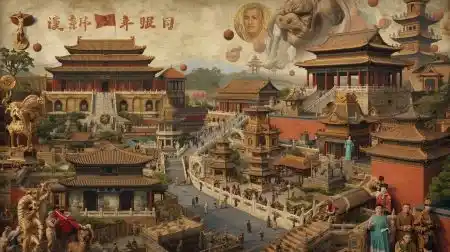
History of China is one of the longest, most continuous, and most remarkable historical narratives in the entire world, spanning over five thousand years of civilization, cultural evolution, dynastic rule, philosophical thought, technological innovation, and political transformation. China's history is often organized...
100
Questions
3.6/ 5.0
No reviews yet
5
Learners
100% Free
Untimed & Flexible
About History of China
History of China is one of the longest, most continuous, and most remarkable historical narratives in the entire world, spanning over five thousand years of civilization, cultural evolution, dynastic rule, philosophical thought, technological innovation, and political transformation. China's history is often organized around its succession of imperial dynasties, beginning with the legendary Xia Dynasty and progressing through powerful empires such as the Shang, Zhou, Qin, Han, Tang, Song, Ming, and Qing dynasties, each contributing uniquely to the development of Chinese culture, governance, science, art, and territorial expansion. As one of the four great ancient civilizations of the world, China has made extraordinary and enduring contributions to human history that continue to influence the modern world in profound ways.The early dynasties of China established the political, philosophical, and cultural foundations upon which Chinese civilization was built. The Zhou Dynasty gave rise to the Hundred Schools of Thought, a golden age of intellectual activity that produced Confucianism, Taoism, and Legalism — philosophical traditions that shaped Chinese society, governance, and ethics for millennia. The Qin Dynasty, under Emperor Qin Shi Huang, unified China for the first time in 221 BCE, standardizing weights, measures, currency, and writing, and beginning the construction of the Great Wall of China. The Han Dynasty that followed is considered a golden age of Chinese civilization, during which the Silk Road was established, connecting China to Central Asia, the Middle East, and Europe through a vast network of trade and cultural exchange. Inventions such as paper, the compass, gunpowder, and printing — known as the Four Great Inventions — emerged during various dynasties and revolutionized human civilization worldwide.The medieval and early modern periods of Chinese history saw the rise of the Tang and Song dynasties, celebrated for their remarkable achievements in art, poetry, commerce, and technology. The Mongol conquests of the 13th century established the Yuan Dynasty under Kublai Khan, briefly uniting China within the vast Mongol Empire. The Ming Dynasty restored Chinese rule and oversaw magnificent achievements in architecture, including the construction of the Forbidden City in Beijing, and the famous voyages of Admiral Zheng He across Southeast Asia, South Asia, and East Africa. The Qing Dynasty, China's last imperial dynasty, ruled until 1912, when the Republic of China was established following the Xinhai Revolution. The 20th century brought immense upheaval — including the Japanese invasion, civil war between Nationalists and Communists, and the founding of the People's Republic of China under Mao Zedong in 1949. China's subsequent transformation through economic reforms under Deng Xiaoping into one of the world's leading economic and political powers represents one of the most extraordinary national transformations in modern history. Understanding the history of China is essential for comprehending the cultural values, political dynamics, and global ambitions of one of the world's most influential civilizations today.
History OF CHINA - Part 1
Not startedDiscover the remarkable History of China through interactive quizzes covering its ancient dynasties, great emperors, cultural achievements,...
Start
History OF CHINA - Part 2
Not startedDiscover the remarkable History of China through interactive quizzes covering its ancient dynasties, great emperors, cultural achievements,...
Start
History OF CHINA - Part 3
Not startedDiscover the remarkable History of China through interactive quizzes covering its ancient dynasties, great emperors, cultural achievements,...
Start
History OF CHINA - Part 4
Not startedDiscover the remarkable History of China through interactive quizzes covering its ancient dynasties, great emperors, cultural achievements,...
Start
No quizzes match your search.
Community feedback
What Learners Say About This Topic
Real reflections from learners who practiced History of China.
No approved reviews yet. Be the first to share your experience.
Format
Quiz Format & Structure
Each quiz is designed to comprehensively test your knowledge on the selected topic. Here's what you can expect:
All Questions Mandatory
You must answer all questions before submitting — no question can be left blank
Question Types
All questions are multiple choice with 4 options (A, B, C, D) where only one answer is correct
Quiz Length
Quizzes typically contain 10–25 questions depending on the category and difficulty
Equal Weightage
Each question carries equal marks for fair assessment of your knowledge
Review Option
Review all your answers before final submission to catch any mistakes
Question Locked
Cannot change or select another option after selection
Advice
Tips for Success
Read Questions Carefully
Take your time to read each question thoroughly. Since there's no time limit, make sure you understand what's being asked before selecting an answer.
Eliminate Wrong Options
If you're unsure, try eliminating options you know are incorrect. This increases your chances of selecting the right answer.
Trust Your First Instinct
Your first instinct is often correct. While you should be careful, avoid changing answers unless you're certain you made a mistake.
Review Before Submitting
Before hitting submit, review all your answers to ensure you haven't accidentally skipped any questions or made careless mistakes.
Learn from Mistakes
After viewing your results, take time to understand why you got certain questions wrong. This helps improve future performance.
Take Multiple Attempts
Don't worry about getting everything right the first time. Taking quizzes multiple times helps reinforce your knowledge.
Related topics
More in History
Explore other sub topics and keep practicing across the subject.

History of Europe
Study Europe’s historical journey from ancient Greece and Rome to medieval kingdoms, world...
View quizzes
Indian Art and Culture
Test your knowledge of India’s rich artistic and cultural heritage, including traditions,...
View quizzes
ગુજરાતનો ઈતિહાસ
ગુજરાતના ગૌરવશાળી ઇતિહાસ, પ્રાચીન સંસ્કૃતિ, રાજવંશો, સ્વાતંત્ર્ય સંગ્રામ, ઐતિહાસિક સ્થળો અ...
View quizzes
History
Test your knowledge of history, including ancient, medieval, and modern India, world histo...
View quizzes