4
Quizzes
Topic
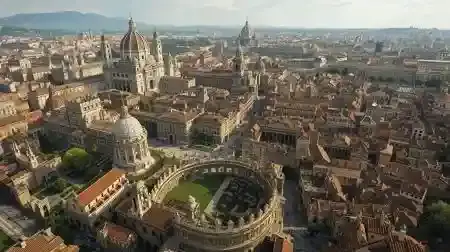
History of Europe
History of Europe is a vast, complex, and profoundly influential narrative spanning thousands of years, encompassing the rise and fall of civilizations, empires, monarchies, and republics that have collectively shaped the political, cultural, intellectual, and economic foundations of the modern world. Europe's history...
100
Questions
4.7/ 5.0
No reviews yet
5
Learners
100% Free
Untimed & Flexible
About History of Europe
History of Europe is a vast, complex, and profoundly influential narrative spanning thousands of years, encompassing the rise and fall of civilizations, empires, monarchies, and republics that have collectively shaped the political, cultural, intellectual, and economic foundations of the modern world. Europe's history begins with prehistoric settlements and the ancient civilizations of Greece and Rome, progresses through the medieval feudal kingdoms and the Renaissance, and extends through the Age of Exploration, the Scientific Revolution, the Enlightenment, the Industrial Revolution, two devastating World Wars, and the formation of the European Union — each era leaving an indelible mark on the continent and the world at large. Ancient Greece, flourishing between the 8th and 4th centuries BCE, laid the intellectual and cultural foundations of Western civilization through its extraordinary contributions to philosophy, democracy, mathematics, science, literature, and art. Greek city-states such as Athens, Sparta, and Corinth developed distinct political systems and cultural traditions, while thinkers like Socrates, Plato, Aristotle, and Pythagoras transformed human understanding of the world. The conquests of Alexander the Great spread Greek culture across a vast territory from Egypt to Central Asia, creating the Hellenistic world. Rome subsequently inherited and expanded upon Greek civilization, building a republic and later an empire that governed much of Europe, North Africa, and the Middle East for centuries, spreading Roman law, Latin language, Christian religion, and engineering achievements across the known world. The medieval period of European history, following the fall of the Western Roman Empire in 476 CE, was characterized by feudalism, the rise of the Catholic Church as the dominant political and spiritual authority, the Crusades, the Black Death, and the flowering of Gothic art and architecture. The Renaissance of the 14th to 17th centuries marked a revolutionary intellectual and artistic rebirth, with figures such as Leonardo da Vinci, Michelangelo, Galileo, and Copernicus transforming art, science, and human self-understanding. The Protestant Reformation ignited by Martin Luther challenged the authority of the Catholic Church, reshaping the religious landscape of Europe. The Age of Exploration led European powers to colonize vast territories across the Americas, Africa, and Asia. The 18th century Enlightenment promoted reason, individual rights, and democratic governance, inspiring revolutions in America and France. The 19th century Industrial Revolution transformed European economies and societies, while the 20th century brought two catastrophic World Wars, the Holocaust, the Cold War, and ultimately the creation of the European Union — a remarkable project of political and economic integration aimed at ensuring lasting peace and prosperity across the continent. The history of Europe is thus a sweeping and multifaceted story of human ambition, creativity, conflict, and resilience that continues to shape the destiny of the world.
History of Europe - Part 1
Not startedPlay fun and challenging quizzes to test your knowledge across subjects and improve your general awareness through MCQs. (Part 1)
Start
History of Europe - Part 2
Not startedPlay fun and challenging quizzes to test your knowledge across subjects and improve your general awareness through MCQs. (Part 2)
Start
History of Europe - Part 3
Not startedPlay fun and challenging quizzes to test your knowledge across subjects and improve your general awareness through MCQs. (Part 3)
Start
History of Europe - Part 4
Not startedPlay fun and challenging quizzes to test your knowledge across subjects and improve your general awareness through MCQs. (Part 4)
Start
No quizzes match your search.
Community feedback
What Learners Say About This Topic
Real reflections from learners who practiced History of Europe.
No approved reviews yet. Be the first to share your experience.
Format
Quiz Format & Structure
Each quiz is designed to comprehensively test your knowledge on the selected topic. Here's what you can expect:
All Questions Mandatory
You must answer all questions before submitting — no question can be left blank
Question Types
All questions are multiple choice with 4 options (A, B, C, D) where only one answer is correct
Quiz Length
Quizzes typically contain 10–25 questions depending on the category and difficulty
Equal Weightage
Each question carries equal marks for fair assessment of your knowledge
Review Option
Review all your answers before final submission to catch any mistakes
Question Locked
Cannot change or select another option after selection
Advice
Tips for Success
Read Questions Carefully
Take your time to read each question thoroughly. Since there's no time limit, make sure you understand what's being asked before selecting an answer.
Eliminate Wrong Options
If you're unsure, try eliminating options you know are incorrect. This increases your chances of selecting the right answer.
Trust Your First Instinct
Your first instinct is often correct. While you should be careful, avoid changing answers unless you're certain you made a mistake.
Review Before Submitting
Before hitting submit, review all your answers to ensure you haven't accidentally skipped any questions or made careless mistakes.
Learn from Mistakes
After viewing your results, take time to understand why you got certain questions wrong. This helps improve future performance.
Take Multiple Attempts
Don't worry about getting everything right the first time. Taking quizzes multiple times helps reinforce your knowledge.
Related topics
More in History
Explore other sub topics and keep practicing across the subject.
History of China
Explore China’s ancient dynasties, cultural traditions, inventions, and political transfor...
View quizzes
History
Test your knowledge of history, including ancient, medieval, and modern India, world histo...
View quizzes
Indian Art and Culture
Test your knowledge of India’s rich artistic and cultural heritage, including traditions,...
View quizzes
Indian History
Discover India’s rich and diverse past, covering ancient civilizations, medieval kingdoms,...
View quizzes