4
Quizzes
Topic
world civilization
World Civilization refers to the collective study of the great human societies, cultures, empires, and intellectual traditions that have emerged and evolved across different regions of the world throughout history, shaping the political, social, economic, religious, and artistic fabric of human existence. From the earl...
100
Questions
4.3/ 5.0
No reviews yet
6
Learners
100% Free
Untimed & Flexible
About world civilization
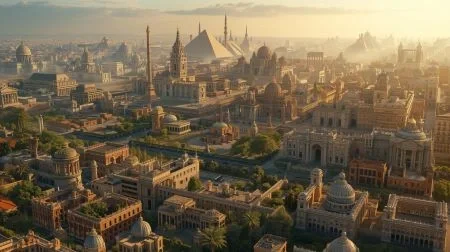
World Civilization refers to the collective study of the great human societies, cultures, empires, and intellectual traditions that have emerged and evolved across different regions of the world throughout history, shaping the political, social, economic, religious, and artistic fabric of human existence. From the earliest river valley civilizations of Mesopotamia, Egypt, the Indus Valley, and China to the classical empires of Greece, Rome, Persia, and India, and from the medieval kingdoms of Europe, Africa, and the Americas to the modern nation-states of the contemporary era, world civilization traces the extraordinary journey of humanity across thousands of years of progress, conflict, innovation, and cultural exchange. The study of world civilization encompasses the rise and fall of empires, the development of writing systems and languages, the evolution of religious and philosophical thought, the growth of trade and commerce, and the achievements of art, architecture, science, and technology across diverse cultures. Ancient Mesopotamia, often called the cradle of civilization, gave the world the first writing system — cuneiform — along with early systems of law, governance, and agriculture. Ancient Egypt produced monumental architecture and sophisticated religious traditions along the banks of the Nile. Greek civilization laid the intellectual foundations of Western philosophy, democracy, and scientific inquiry, while Roman civilization built a vast empire that spread law, engineering, and governance across Europe, the Middle East, and North Africa. World civilization also encompasses the contributions of non-Western cultures that are often underrepresented in traditional historical narratives. The Islamic Golden Age produced remarkable advances in mathematics, astronomy, medicine, and philosophy. The civilizations of sub-Saharan Africa developed complex kingdoms and trade networks, while the indigenous civilizations of the Americas — including the Aztec, Maya, and Inca — built sophisticated societies with advanced knowledge of astronomy, agriculture, and urban planning. The study of world civilization encourages cross-cultural understanding, historical empathy, and a recognition of the shared human heritage that transcends geographical boundaries. It provides essential context for understanding the modern world and the diverse civilizations that continue to shape our collective identity, values, and aspirations today.
World civilization - Part 1
Not startedTest your knowledge on major world civilizations, their history, culture, and contributions to humanity.
Start
World civilization - Part 2
Not startedTest your knowledge on major world civilizations, their history, culture, and contributions to humanity.
Start
World civilization - Part 3
Not startedTest your knowledge on major world civilizations, their history, culture, and contributions to humanity.
Start
World civilization - Part 4
Not startedTest your knowledge on major world civilizations, their history, culture, and contributions to humanity.
Start
No quizzes match your search.
Community feedback
What Learners Say About This Topic
Real reflections from learners who practiced world civilization.
No approved reviews yet. Be the first to share your experience.
Format
Quiz Format & Structure
Each quiz is designed to comprehensively test your knowledge on the selected topic. Here's what you can expect:
All Questions Mandatory
You must answer all questions before submitting — no question can be left blank
Question Types
All questions are multiple choice with 4 options (A, B, C, D) where only one answer is correct
Quiz Length
Quizzes typically contain 10–25 questions depending on the category and difficulty
Equal Weightage
Each question carries equal marks for fair assessment of your knowledge
Review Option
Review all your answers before final submission to catch any mistakes
Question Locked
Cannot change or select another option after selection
Advice
Tips for Success
Read Questions Carefully
Take your time to read each question thoroughly. Since there's no time limit, make sure you understand what's being asked before selecting an answer.
Eliminate Wrong Options
If you're unsure, try eliminating options you know are incorrect. This increases your chances of selecting the right answer.
Trust Your First Instinct
Your first instinct is often correct. While you should be careful, avoid changing answers unless you're certain you made a mistake.
Review Before Submitting
Before hitting submit, review all your answers to ensure you haven't accidentally skipped any questions or made careless mistakes.
Learn from Mistakes
After viewing your results, take time to understand why you got certain questions wrong. This helps improve future performance.
Take Multiple Attempts
Don't worry about getting everything right the first time. Taking quizzes multiple times helps reinforce your knowledge.
Related topics
More in Civilizations
Explore other sub topics and keep practicing across the subject.
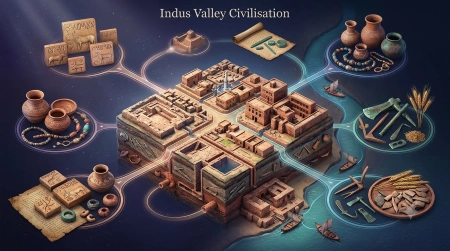
Indus Valley Civilisation
Indus Valley Civilisation — One of the world’s earliest urban civilisations, known for its...
View quizzes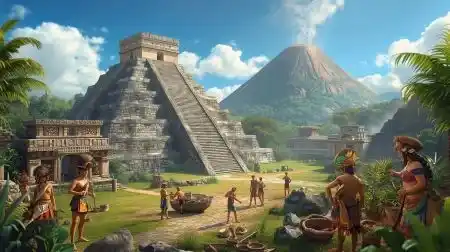
Aztec Civilization
Learn about the Aztec Empire of Mesoamerica, known for its capital Tenochtitlan, military...
View quizzes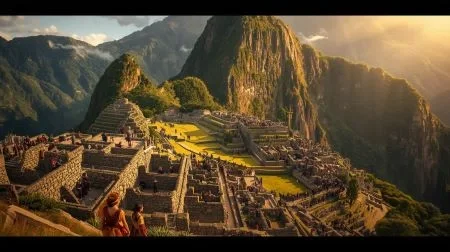
Incan Civilization
Learn about the powerful Incan Empire of South America, known for advanced engineering, ag...
View quizzes
African Civilization
Discover the rich history and diverse cultures of ancient African civilizations such as Eg...
View quizzes