46
Quizzes
Topic
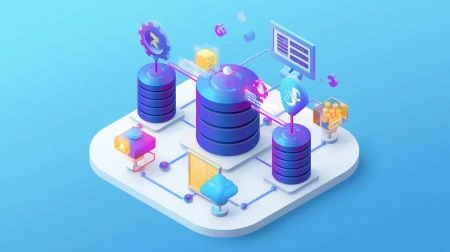
DBMS
Database Management System (DBMS) is a software system that enables users to create, store, manage, manipulate, retrieve, and secure structured data in an organized and efficient manner. It serves as an intermediary between users or application programs and the underlying database, providing a systematic and controlled...
1,148
Questions
3.8/ 5.0
No reviews yet
3
Learners
100% Free
Untimed & Flexible
About DBMS
Database Management System (DBMS) is a software system that enables users to create, store, manage, manipulate, retrieve, and secure structured data in an organized and efficient manner. It serves as an intermediary between users or application programs and the underlying database, providing a systematic and controlled environment for data management that ensures accuracy, consistency, security, and accessibility. In the modern digital world, where organizations generate and rely upon massive volumes of data for their day-to-day operations and strategic decision-making, a robust DBMS is an indispensable component of information technology infrastructure across industries ranging from banking and healthcare to retail, education, and government. A DBMS provides several critical functions including data definition, data manipulation, data retrieval, transaction management, concurrency control, backup and recovery, and security administration. Data is organized within a DBMS using various models, the most widely used being the relational model, which organizes data into structured tables consisting of rows and columns with defined relationships between them. Structured Query Language (SQL) is the standard programming language used to interact with relational databases, allowing users to create, read, update, and delete data with precision and flexibility. Popular relational DBMS platforms include Oracle, MySQL, Microsoft SQL Server, and PostgreSQL. Beyond relational databases, modern DBMS technologies also include NoSQL databases — such as MongoDB, Cassandra, and Redis — which are designed to handle unstructured, semi-structured, and large-scale distributed data more effectively than traditional relational systems. Key concepts in DBMS include the ACID properties — Atomicity, Consistency, Isolation, and Durability — which ensure reliable and accurate transaction processing even in the face of system failures or concurrent access by multiple users. Normalization is the process of organizing database tables to reduce redundancy and improve data integrity, while indexing techniques enhance the speed of data retrieval operations. Entity-Relationship (ER) modeling is used during database design to visually represent data entities and their relationships before implementation. Distributed databases, cloud databases, and in-memory databases represent the latest advancements in database technology, enabling faster processing, global scalability, and real-time analytics. Data warehouses and data lakes built upon DBMS foundations are used for large-scale business intelligence and analytics. As organizations continue to generate unprecedented volumes of data, the role of DBMS in ensuring that this data is stored securely, accessed efficiently, and utilized intelligently has never been more critical, making it one of the most fundamental and valuable technologies in the modern information-driven economy.
DBMS - Part 1
Not startedDBMS (Database Management System) Quiz tests your knowledge of how databases are organized, managed, and queried efficiently. (Part 1)
Start
DBMS - Part 2
Not startedDBMS (Database Management System) Quiz tests your knowledge of how databases are organized, managed, and queried efficiently. (Part 2)
Start
DBMS - Part 3
Not startedDBMS (Database Management System) Quiz tests your knowledge of how databases are organized, managed, and queried efficiently. (Part 3)
Start
DBMS - Part 4
Not startedDBMS (Database Management System) Quiz tests your knowledge of how databases are organized, managed, and queried efficiently. (Part 4)
Start
dbms - Part 5
Not startedSelf-paced MCQ practice with instant results after you submit.
Start
dbms - Part 6
Not startedSelf-paced MCQ practice with instant results after you submit.
Start
dbms - Part 7
Not startedSelf-paced MCQ practice with instant results after you submit.
Start
dbms - Part 8
Not startedSelf-paced MCQ practice with instant results after you submit.
Start
dbms - Part 9
Not startedSelf-paced MCQ practice with instant results after you submit.
Start
dbms - Part 10
Not startedSelf-paced MCQ practice with instant results after you submit.
Start
dbms - Part 11
Not startedSelf-paced MCQ practice with instant results after you submit.
Start
dbms - Part 12
Not startedSelf-paced MCQ practice with instant results after you submit.
Start
dbms - Part 13
Not startedSelf-paced MCQ practice with instant results after you submit.
Start
dbms - Part 14
Not startedSelf-paced MCQ practice with instant results after you submit.
Start
dbms - Part 15
Not startedSelf-paced MCQ practice with instant results after you submit.
Start
dbms - Part 16
Not startedSelf-paced MCQ practice with instant results after you submit.
Start
dbms - Part 17
Not startedSelf-paced MCQ practice with instant results after you submit.
Start
dbms - Part 18
Not startedSelf-paced MCQ practice with instant results after you submit.
Start
dbms - Part 19
Not startedSelf-paced MCQ practice with instant results after you submit.
Start
dbms - Part 20
Not startedSelf-paced MCQ practice with instant results after you submit.
Start
dbms - Part 21
Not startedSelf-paced MCQ practice with instant results after you submit.
Start
dbms - Part 22
Not startedSelf-paced MCQ practice with instant results after you submit.
Start
dbms - Part 23
Not startedSelf-paced MCQ practice with instant results after you submit.
Start
dbms - Part 24
Not startedSelf-paced MCQ practice with instant results after you submit.
Start
dbms - Part 25
Not startedSelf-paced MCQ practice with instant results after you submit.
Start
dbms - Part 26
Not startedSelf-paced MCQ practice with instant results after you submit.
Start
dbms - Part 27
Not startedSelf-paced MCQ practice with instant results after you submit.
Start
dbms - Part 28
Not startedSelf-paced MCQ practice with instant results after you submit.
Start
dbms - Part 29
Not startedSelf-paced MCQ practice with instant results after you submit.
Start
dbms - Part 30
Not startedSelf-paced MCQ practice with instant results after you submit.
Start
dbms - Part 31
Not startedSelf-paced MCQ practice with instant results after you submit.
Start
dbms - Part 32
Not startedSelf-paced MCQ practice with instant results after you submit.
Start
dbms - Part 33
Not startedSelf-paced MCQ practice with instant results after you submit.
Start
dbms - Part 34
Not startedSelf-paced MCQ practice with instant results after you submit.
Start
dbms - Part 35
Not startedSelf-paced MCQ practice with instant results after you submit.
Start
dbms - Part 36
Not startedSelf-paced MCQ practice with instant results after you submit.
Start
dbms - Part 37
Not startedSelf-paced MCQ practice with instant results after you submit.
Start
dbms - Part 38
Not startedSelf-paced MCQ practice with instant results after you submit.
Start
dbms - Part 39
Not startedSelf-paced MCQ practice with instant results after you submit.
Start
dbms - Part 40
Not startedSelf-paced MCQ practice with instant results after you submit.
Start
dbms - Part 41
Not startedSelf-paced MCQ practice with instant results after you submit.
Start
dbms - Part 42
Not startedSelf-paced MCQ practice with instant results after you submit.
Start
dbms - Part 43
Not startedSelf-paced MCQ practice with instant results after you submit.
Start
dbms - Part 44
Not startedSelf-paced MCQ practice with instant results after you submit.
Start
dbms - Part 45
Not startedSelf-paced MCQ practice with instant results after you submit.
Start
dbms - Part 46
Not startedSelf-paced MCQ practice with instant results after you submit.
Start
No quizzes match your search.
Community feedback
What Learners Say About This Topic
Real reflections from learners who practiced DBMS.
No approved reviews yet. Be the first to share your experience.
Format
Quiz Format & Structure
Each quiz is designed to comprehensively test your knowledge on the selected topic. Here's what you can expect:
All Questions Mandatory
You must answer all questions before submitting — no question can be left blank
Question Types
All questions are multiple choice with 4 options (A, B, C, D) where only one answer is correct
Quiz Length
Quizzes typically contain 10–25 questions depending on the category and difficulty
Equal Weightage
Each question carries equal marks for fair assessment of your knowledge
Review Option
Review all your answers before final submission to catch any mistakes
Question Locked
Cannot change or select another option after selection
Advice
Tips for Success
Read Questions Carefully
Take your time to read each question thoroughly. Since there's no time limit, make sure you understand what's being asked before selecting an answer.
Eliminate Wrong Options
If you're unsure, try eliminating options you know are incorrect. This increases your chances of selecting the right answer.
Trust Your First Instinct
Your first instinct is often correct. While you should be careful, avoid changing answers unless you're certain you made a mistake.
Review Before Submitting
Before hitting submit, review all your answers to ensure you haven't accidentally skipped any questions or made careless mistakes.
Learn from Mistakes
After viewing your results, take time to understand why you got certain questions wrong. This helps improve future performance.
Take Multiple Attempts
Don't worry about getting everything right the first time. Taking quizzes multiple times helps reinforce your knowledge.
Related topics
More in Computer Science & IT
Explore other sub topics and keep practicing across the subject.
Microsoft PowerPoint
Test your knowledge of Microsoft PowerPoint, including presentation creation, slide design...
View quizzes
Internet
Test your knowledge of the Internet, including its basic concepts, services, protocols, co...
View quizzes
Computer Organization
Understand the internal working of computer hardware, including data representation, contr...
View quizzes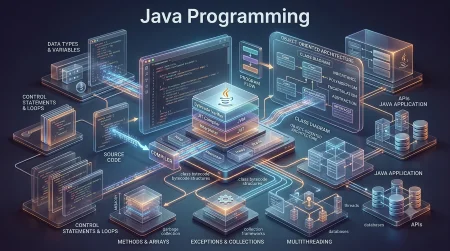
Java
Java is a popular, object-oriented programming language known for its portability, reliabi...
View quizzes