4
Quizzes

Topic
Algorithm design
Algorithm Design is the systematic and creative process of developing step-by-step computational procedures — known as algorithms — that solve specific problems, perform desired computations, or accomplish well-defined tasks in an efficient, accurate, and reliable manner. An algorithm is essentially a finite sequence o...
100
Questions
4.8/ 5.0
No reviews yet
48
Learners
100% Free
Untimed & Flexible
About Algorithm design
Algorithm Design is the systematic and creative process of developing step-by-step computational procedures — known as algorithms — that solve specific problems, perform desired computations, or accomplish well-defined tasks in an efficient, accurate, and reliable manner. An algorithm is essentially a finite sequence of unambiguous instructions that transforms a given input into a desired output, forming the fundamental building block of all computer programs and software systems. Algorithm design is one of the most intellectually rich and practically important areas of computer science and mathematics, sitting at the heart of virtually every technological application — from search engines, social media platforms, and navigation systems to artificial intelligence, cryptography, data compression, and scientific simulations. The quality of an algorithm — measured in terms of its correctness, time complexity, space complexity, and scalability — can make the difference between a system that works efficiently at scale and one that is computationally impractical.The process of algorithm design typically involves a series of intellectual steps including understanding and formally defining the problem, identifying the appropriate algorithmic strategy or paradigm, developing a precise solution, analyzing its correctness through mathematical proof, and evaluating its efficiency using complexity analysis. The most important algorithmic design paradigms include divide and conquer, dynamic programming, greedy algorithms, backtracking, branch and bound, and randomized algorithms. Divide and conquer strategies, exemplified by merge sort and quicksort, break complex problems into smaller subproblems, solve them independently, and combine the results. Dynamic programming, applied in problems such as the knapsack problem and shortest path computation, avoids redundant computation by storing solutions to overlapping subproblems. Greedy algorithms make locally optimal choices at each step to construct globally optimal solutions, as seen in Dijkstra's shortest path algorithm and Huffman encoding. The efficiency of algorithms is formally analyzed using Big O notation, which describes how the running time or memory usage of an algorithm grows as the size of the input increases, enabling developers to compare and select the most appropriate algorithm for a given application.Classic algorithms in computer science span a wide range of problem domains, including sorting and searching, graph traversal, string matching, computational geometry, network flow, and optimization. Foundational sorting algorithms such as bubble sort, insertion sort, heap sort, and merge sort each exhibit different performance characteristics and are suited to different use cases. Graph algorithms such as breadth-first search (BFS), depth-first search (DFS), Kruskal's algorithm, and Prim's algorithm are essential for solving problems in network routing, social network analysis, and geographic information systems. Advanced topics in algorithm design include NP-completeness theory, approximation algorithms for computationally intractable problems, parallel and distributed algorithms, and online algorithms. The field of algorithm design has been profoundly transformed by the advent of machine learning and artificial intelligence, which introduce new classes of learning-based algorithms that adapt and improve with experience. As computational problems continue to grow in scale and complexity — driven by big data, cloud computing, and artificial intelligence — algorithm design remains one of the most critical and intellectually rewarding disciplines in computer science, with the power to unlock new possibilities across every domain of human knowledge and technological innovation.
Algorithm design - Part 1
Not startedImprove your coding skills by solving algorithm design quizzes that boost your logic and problem-solving ability. (Part 1)
Start
Algorithm design - Part 2
Not startedImprove your coding skills by solving algorithm design quizzes that boost your logic and problem-solving ability. (Part 2)
Start
Algorithm design - Part 3
Not startedImprove your coding skills by solving algorithm design quizzes that boost your logic and problem-solving ability. (Part 3)
Start
Algorithm design - Part 4
Not startedImprove your coding skills by solving algorithm design quizzes that boost your logic and problem-solving ability. (Part 4)
Start
No quizzes match your search.
Community feedback
What Learners Say About This Topic
Real reflections from learners who practiced Algorithm design.
No approved reviews yet. Be the first to share your experience.
Format
Quiz Format & Structure
Each quiz is designed to comprehensively test your knowledge on the selected topic. Here's what you can expect:
All Questions Mandatory
You must answer all questions before submitting — no question can be left blank
Question Types
All questions are multiple choice with 4 options (A, B, C, D) where only one answer is correct
Quiz Length
Quizzes typically contain 10–25 questions depending on the category and difficulty
Equal Weightage
Each question carries equal marks for fair assessment of your knowledge
Review Option
Review all your answers before final submission to catch any mistakes
Question Locked
Cannot change or select another option after selection
Advice
Tips for Success
Read Questions Carefully
Take your time to read each question thoroughly. Since there's no time limit, make sure you understand what's being asked before selecting an answer.
Eliminate Wrong Options
If you're unsure, try eliminating options you know are incorrect. This increases your chances of selecting the right answer.
Trust Your First Instinct
Your first instinct is often correct. While you should be careful, avoid changing answers unless you're certain you made a mistake.
Review Before Submitting
Before hitting submit, review all your answers to ensure you haven't accidentally skipped any questions or made careless mistakes.
Learn from Mistakes
After viewing your results, take time to understand why you got certain questions wrong. This helps improve future performance.
Take Multiple Attempts
Don't worry about getting everything right the first time. Taking quizzes multiple times helps reinforce your knowledge.
Related topics
More in Computer Science & IT
Explore other sub topics and keep practicing across the subject.

Basic Information of Computer
Test your knowledge of fundamental computer concepts, including computer components, hardw...
View quizzes
Microsoft PowerPoint
Test your knowledge of Microsoft PowerPoint, including presentation creation, slide design...
View quizzes
Computer Software
Test your knowledge of computer software, including system software, application software,...
View quizzes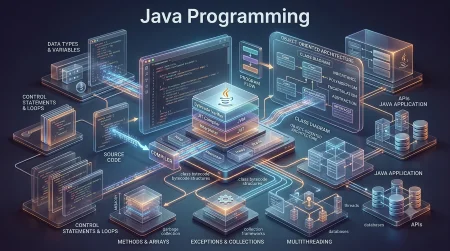
Java
Java is a popular, object-oriented programming language known for its portability, reliabi...
View quizzes