MCQ Exam Test
  • Current affairs
  • Educational Development
  • Competitive exams
  • About Us
  • Contact Us
  • Β© 2026 mcqexamtest. All rights reserved.

    • About Us
    • Contact Us
    • Privacy Policy
    • Terms & Conditions
    • FAQ
    1. Home
    2. β†’
    3. Computer Science & IT
    πŸ“š

    Computer Science & IT

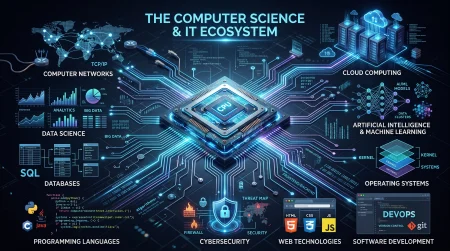
    This comprehensive category delves into the foundational and advanced pillars of the digital era, ranging from algorithmic logic to complex system architecture. Learners will explore critical domains such as software engineering, cloud computing, cybersecurity defense strategies, and the data structures that power modern applications. By bridging the gap between theoretical computer science and practical IT infrastructure, this section fosters essential skills in coding, network administration, and artificial intelligence. It is designed to cultivate the analytical mindset and technical proficiency required to innovate and solve complex problems in the rapidly evolving global technology sector.

    Cloud Computing

    Cloud Computing

    Start Quiz
    0/12

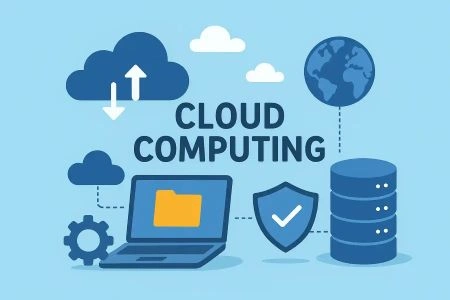
    Cloud Computing is the delivery of computing services β€” including servers, storage, databases, networking, software, analytics, and artificial intelligence β€” over the internet, commonly referred to as "the cloud." Instead of owning and maintaining physical hardware and infrastructure, individuals and organizations can access these resources on demand from cloud service providers such as Amazon Web Services, Microsoft Azure, and Google Cloud Platform, paying only for what they use. Cloud computing operates on three primary service models: Infrastructure as a Service (IaaS), Platform as a Service (PaaS), and Software as a Service (SaaS). Each model offers different levels of control, flexibility, and management, catering to the diverse needs of businesses and developers. It can be deployed as a public cloud, private cloud, or hybrid cloud, depending on the security and operational requirements of an organization. The benefits of cloud computing are vast and transformative. It offers unmatched scalability, allowing businesses to expand or reduce resources instantly based on demand. It significantly reduces operational costs by eliminating the need for expensive on-site hardware and IT maintenance. Cloud computing also enhances collaboration, enabling teams across different locations to work together in real time. With built-in backup and disaster recovery features, it ensures data security and business continuity. In today's fast-paced digital world, cloud computing has become the foundation of modern technology infrastructure, driving innovation across industries.

    Operating System

    Operating System

    Start Quiz
    0/4

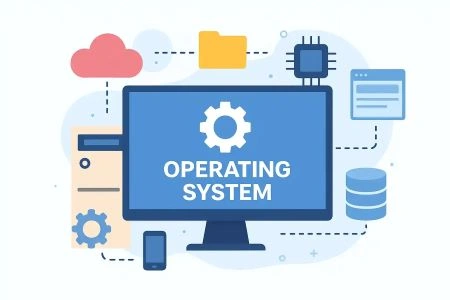
    Operating System (OS) is the most essential system software that acts as an intermediary between computer hardware and the end user. It manages and coordinates all hardware resources β€” such as the processor, memory, storage, and input/output devices β€” ensuring that software applications run smoothly and efficiently. Without an operating system, a computer would be nothing more than a collection of electronic components incapable of performing any useful task. An operating system performs several critical functions, including process management, memory management, file system management, device management, and security control. It schedules tasks and allocates CPU time to multiple processes simultaneously through multitasking, ensuring optimal system performance. Popular operating systems include Microsoft Windows, macOS, Linux, Android, and iOS, each designed for specific types of devices and user needs. The OS also provides a user interface β€” either a Graphical User Interface (GUI) or a Command Line Interface (CLI) β€” through which users interact with the system. It acts as a platform on which all other software applications are installed and executed. Security features embedded within the OS protect data from unauthorized access, malware, and system failures. As technology continues to evolve, modern operating systems have become increasingly sophisticated, supporting cloud integration, virtual machines, and real-time processing. The operating system remains the core foundation of every computing device, making it one of the most critical components in the world of information technology.

    Computer Architecture

    Computer Architecture

    Start Quiz
    0/4

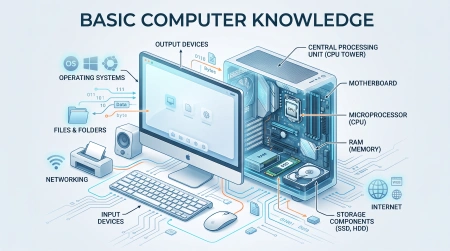
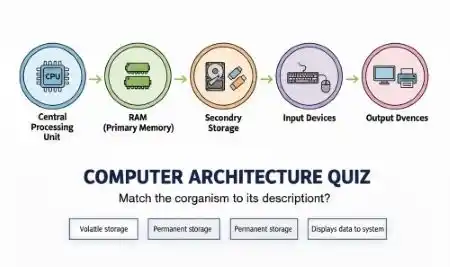
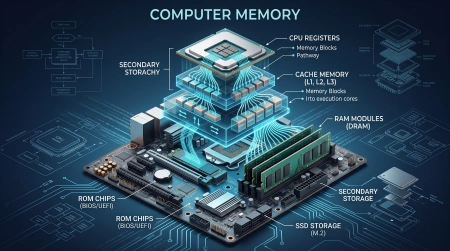
    Computer Architecture refers to the conceptual design, structural organization, and functional description of a computer system, defining how hardware components interact and work together to execute instructions and process data efficiently. It essentially serves as the blueprint that determines the capabilities, performance, and efficiency of a computing system. Computer architecture bridges the gap between hardware engineering and software programming, ensuring that the physical components of a computer are organized in a way that allows software applications to run effectively and deliver optimal performance. The key components of computer architecture include the Central Processing Unit (CPU), memory hierarchy, input/output systems, and the instruction set architecture (ISA). The CPU, often referred to as the brain of the computer, consists of the Arithmetic Logic Unit (ALU), Control Unit (CU), and registers, which together execute instructions, perform calculations, and manage data flow. The memory hierarchy includes cache memory, primary memory (RAM), and secondary storage, each differing in speed, size, and cost. The instruction set architecture defines the set of instructions that a processor can execute, forming the interface between hardware and software. Popular ISAs include x86, ARM, and RISC-V, each designed for specific computing needs. Key concepts in computer architecture include pipelining, parallel processing, superscalar execution, cache memory design, and memory management. Pipelining allows multiple instruction stages to be executed simultaneously, significantly improving processor speed and throughput. Modern architectures also incorporate multi-core processors, enabling parallel execution of multiple tasks at once. As technology advances, computer architecture continues to evolve to address growing demands for speed, energy efficiency, and computational power. Emerging trends such as quantum computing, neuromorphic architecture, and AI-specific chip design are reshaping the future of this field. A deep understanding of computer architecture is essential for computer engineers, software developers, and system designers who seek to build faster, smarter, and more efficient computing systems.

    Computer Networking

    Computer Networking

    Start Quiz
    0/4

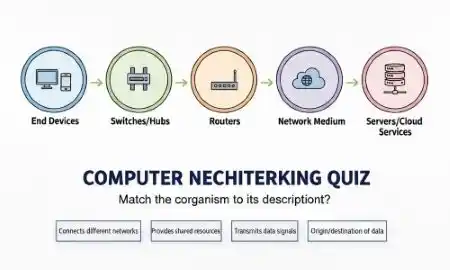
    Computer Networking is the practice of connecting two or more computing devices β€” such as computers, servers, smartphones, and other digital devices β€” to share resources, exchange data, and communicate with each other efficiently and securely. It forms the foundational infrastructure of the modern digital world, enabling everything from simple file sharing between office computers to the global flow of information across the internet. Computer networking is a critical field within information technology, underpinning communication systems, cloud computing, e-commerce, online education, and virtually every aspect of the digital economy. Computer networks are classified based on their scale and geographical coverage. A Local Area Network (LAN) connects devices within a limited area such as a home, office, or school, while a Wide Area Network (WAN) spans large geographical regions, connecting cities or even countries. Metropolitan Area Networks (MANs) cover city-wide connections, and Personal Area Networks (PANs) are designed for short-range device connections. The internet itself is the largest WAN in existence, connecting billions of devices worldwide. Networks can be wired β€” using Ethernet cables and fiber optics β€” or wireless, using Wi-Fi, Bluetooth, or cellular technology. Network topologies such as star, bus, ring, and mesh define the physical or logical arrangement of connected devices. Fundamental networking concepts include the OSI (Open Systems Interconnection) model and the TCP/IP protocol suite, which define the standards and rules governing data transmission across networks. Key networking components include routers, switches, hubs, firewalls, and modems, each serving specific roles in directing and managing data traffic. Network security is a critical aspect of computer networking, involving measures such as encryption, firewalls, virtual private networks (VPNs), and intrusion detection systems to protect data from unauthorized access and cyberattacks. As the world moves toward 5G connectivity, the Internet of Things (IoT), and cloud-based infrastructure, computer networking continues to evolve rapidly. A solid understanding of computer networking is essential for IT professionals, cybersecurity experts, and software engineers operating in today's hyper-connected digital environment.

    Computer Organization

    Computer Organization

    Start Quiz
    0/4

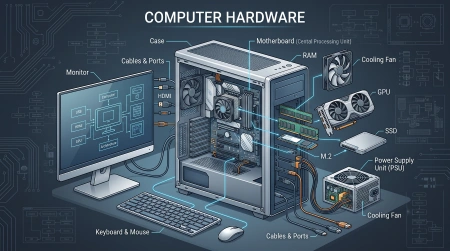
    Computer Organization refers to the operational and physical structure of a computer system, describing how the hardware components are interconnected and how they function together to execute instructions and process information. While computer architecture focuses on the design and conceptual framework of a computer system, computer organization deals with the actual implementation of those architectural specifications at the hardware level. It examines how the CPU, memory, input/output units, and buses are organized and coordinated to perform computational tasks effectively and efficiently. The study of computer organization covers several core components and concepts. The Central Processing Unit (CPU) is the heart of the computer, consisting of the Arithmetic and Logic Unit (ALU), which performs mathematical and logical operations, the Control Unit (CU), which directs the operations of the processor, and a set of registers that temporarily hold data during processing. The memory unit, including RAM and ROM, stores data and instructions required by the CPU. The system bus β€” comprising the data bus, address bus, and control bus β€” serves as the communication pathway between the CPU, memory, and input/output devices, enabling the seamless transfer of data and signals throughout the system. Key topics in computer organization include instruction cycles, addressing modes, memory organization, interrupt handling, microoperations, and input/output organization. The instruction cycle β€” consisting of the fetch, decode, and execute phases β€” describes how a computer retrieves and processes each instruction from memory. Cache memory organization plays a vital role in improving system performance by reducing the time taken to access frequently used data. Input/output organization involves techniques such as programmed I/O, interrupt-driven I/O, and Direct Memory Access (DMA) for efficient data transfer between peripheral devices and the CPU. Understanding computer organization provides students and engineers with a deep insight into the internal workings of computing systems, forming the essential groundwork for advanced studies in computer architecture, embedded systems, and hardware design.

    Data mining

    Data mining

    Start Quiz
    0/4

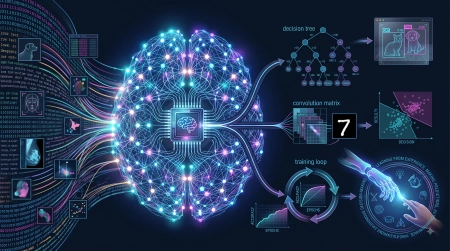
    Data Mining is the process of discovering meaningful patterns, correlations, anomalies, and insights from large volumes of raw data using a combination of statistical analysis, machine learning algorithms, artificial intelligence techniques, and database management systems. In an era defined by the explosive growth of digital data generated by social media, e-commerce, healthcare systems, financial transactions, and the Internet of Things, data mining has emerged as one of the most powerful and sought-after technologies for transforming raw data into actionable knowledge. It enables organizations to make informed, data-driven decisions, improve operational efficiency, understand customer behavior, detect fraud, and gain competitive advantage in increasingly complex and dynamic markets.The data mining process typically follows a structured methodology known as the KDD (Knowledge Discovery in Databases) process, which includes data collection, data cleaning and preprocessing, data transformation, pattern discovery, and interpretation of results. Common data mining techniques include classification, clustering, regression, association rule learning, anomaly detection, and sequential pattern analysis. Classification algorithms such as decision trees, naive Bayes, and support vector machines categorize data into predefined groups, while clustering techniques like k-means and hierarchical clustering group similar data points without prior labels. Association rule learning, famously applied in market basket analysis, identifies relationships between variables β€” such as the classic example of customers who buy diapers also tending to buy beer. These techniques are implemented using powerful tools and platforms such as Python, R, WEKA, RapidMiner, and Apache Spark.Data mining finds applications across virtually every industry and domain. In healthcare, it is used to predict disease outbreaks, identify high-risk patients, and personalize treatment plans. In finance, it powers credit scoring models, fraud detection systems, and algorithmic trading strategies. Retailers use data mining to analyze purchasing patterns, optimize inventory, and deliver personalized marketing recommendations. In education, learning analytics derived from data mining help identify struggling students and improve instructional methods. Telecommunications companies use it to predict customer churn, while security agencies employ it for threat detection and intelligence analysis. However, data mining also raises important ethical concerns related to data privacy, security, consent, and algorithmic bias, making responsible and transparent data practices essential. As the volume and complexity of global data continue to grow exponentially, data mining will remain an indispensable technology for extracting value, generating knowledge, and driving innovation across all sectors of the modern information economy.

    DBMS

    DBMS

    Start Quiz
    0/4

    Database Management System (DBMS) is a software system that enables users to create, store, manage, manipulate, retrieve, and secure structured data in an organized and efficient manner. It serves as an intermediary between users or application programs and the underlying database, providing a systematic and controlled environment for data management that ensures accuracy, consistency, security, and accessibility. In the modern digital world, where organizations generate and rely upon massive volumes of data for their day-to-day operations and strategic decision-making, a robust DBMS is an indispensable component of information technology infrastructure across industries ranging from banking and healthcare to retail, education, and government. A DBMS provides several critical functions including data definition, data manipulation, data retrieval, transaction management, concurrency control, backup and recovery, and security administration. Data is organized within a DBMS using various models, the most widely used being the relational model, which organizes data into structured tables consisting of rows and columns with defined relationships between them. Structured Query Language (SQL) is the standard programming language used to interact with relational databases, allowing users to create, read, update, and delete data with precision and flexibility. Popular relational DBMS platforms include Oracle, MySQL, Microsoft SQL Server, and PostgreSQL. Beyond relational databases, modern DBMS technologies also include NoSQL databases β€” such as MongoDB, Cassandra, and Redis β€” which are designed to handle unstructured, semi-structured, and large-scale distributed data more effectively than traditional relational systems. Key concepts in DBMS include the ACID properties β€” Atomicity, Consistency, Isolation, and Durability β€” which ensure reliable and accurate transaction processing even in the face of system failures or concurrent access by multiple users. Normalization is the process of organizing database tables to reduce redundancy and improve data integrity, while indexing techniques enhance the speed of data retrieval operations. Entity-Relationship (ER) modeling is used during database design to visually represent data entities and their relationships before implementation. Distributed databases, cloud databases, and in-memory databases represent the latest advancements in database technology, enabling faster processing, global scalability, and real-time analytics. Data warehouses and data lakes built upon DBMS foundations are used for large-scale business intelligence and analytics. As organizations continue to generate unprecedented volumes of data, the role of DBMS in ensuring that this data is stored securely, accessed efficiently, and utilized intelligently has never been more critical, making it one of the most fundamental and valuable technologies in the modern information-driven economy.

    Embedded Systems

    Embedded Systems

    Start Quiz
    0/4

    Embedded Systems are specialized computing systems designed to perform dedicated functions or a specific set of tasks within a larger mechanical, electrical, or electronic system, operating with real-time computing constraints and typically functioning without direct human intervention once deployed. Unlike general-purpose computers such as desktops and laptops, which are designed to run a wide variety of software applications, embedded systems are optimized for specific applications and are built directly into the devices they control, forming an integral part of the product's overall functionality. From the microcontrollers inside washing machines, microwave ovens, and digital cameras to the complex processors governing automotive engine management, aircraft flight control systems, medical implants, and industrial automation equipment, embedded systems are ubiquitous in modern technology, powering an estimated 98% of all microprocessors manufactured worldwide. An embedded system typically consists of several key components working in close integration β€” a microprocessor or microcontroller serving as the central processing unit, memory (both volatile RAM and non-volatile flash or ROM) for storing programs and data, input/output interfaces for interacting with sensors, actuators, displays, and communication peripherals, and an operating system or firmware that manages hardware resources and executes application software. Embedded operating systems such as FreeRTOS, VxWorks, Embedded Linux, and QNX are specifically designed for resource-constrained environments where processing power, memory, and energy consumption must be carefully managed. Real-time operating systems (RTOS) are particularly important in applications where the system must respond to inputs within strict and precise time constraints β€” such as in automotive braking systems, medical devices, and industrial control systems β€” where delayed responses could have catastrophic consequences. The design and development of embedded systems involves a unique set of engineering challenges and considerations that distinguish it from conventional software or hardware development. Engineers must carefully balance performance requirements with constraints on size, weight, power consumption, cost, and reliability, often working with highly resource-limited hardware platforms. Programming for embedded systems is typically done in low-level languages such as C and C++, requiring deep knowledge of hardware architecture, memory management, and real-time programming techniques. The testing and validation of embedded systems is particularly rigorous, especially in safety-critical applications in aerospace, automotive, medical, and nuclear domains, where system failures can have life-threatening consequences. The rapid growth of the Internet of Things (IoT) has dramatically expanded the scope and importance of embedded systems, connecting billions of smart devices β€” from home automation sensors and wearable health monitors to smart city infrastructure and industrial robots β€” into vast interconnected networks. As technology continues to advance toward greater miniaturization, intelligence, and connectivity, embedded systems will remain at the heart of the digital transformation shaping every aspect of modern life, industry, and society.

    Algorithm design

    Algorithm design

    Start Quiz
    0/4

    Algorithm Design is the systematic and creative process of developing step-by-step computational procedures β€” known as algorithms β€” that solve specific problems, perform desired computations, or accomplish well-defined tasks in an efficient, accurate, and reliable manner. An algorithm is essentially a finite sequence of unambiguous instructions that transforms a given input into a desired output, forming the fundamental building block of all computer programs and software systems. Algorithm design is one of the most intellectually rich and practically important areas of computer science and mathematics, sitting at the heart of virtually every technological application β€” from search engines, social media platforms, and navigation systems to artificial intelligence, cryptography, data compression, and scientific simulations. The quality of an algorithm β€” measured in terms of its correctness, time complexity, space complexity, and scalability β€” can make the difference between a system that works efficiently at scale and one that is computationally impractical.The process of algorithm design typically involves a series of intellectual steps including understanding and formally defining the problem, identifying the appropriate algorithmic strategy or paradigm, developing a precise solution, analyzing its correctness through mathematical proof, and evaluating its efficiency using complexity analysis. The most important algorithmic design paradigms include divide and conquer, dynamic programming, greedy algorithms, backtracking, branch and bound, and randomized algorithms. Divide and conquer strategies, exemplified by merge sort and quicksort, break complex problems into smaller subproblems, solve them independently, and combine the results. Dynamic programming, applied in problems such as the knapsack problem and shortest path computation, avoids redundant computation by storing solutions to overlapping subproblems. Greedy algorithms make locally optimal choices at each step to construct globally optimal solutions, as seen in Dijkstra's shortest path algorithm and Huffman encoding. The efficiency of algorithms is formally analyzed using Big O notation, which describes how the running time or memory usage of an algorithm grows as the size of the input increases, enabling developers to compare and select the most appropriate algorithm for a given application.Classic algorithms in computer science span a wide range of problem domains, including sorting and searching, graph traversal, string matching, computational geometry, network flow, and optimization. Foundational sorting algorithms such as bubble sort, insertion sort, heap sort, and merge sort each exhibit different performance characteristics and are suited to different use cases. Graph algorithms such as breadth-first search (BFS), depth-first search (DFS), Kruskal's algorithm, and Prim's algorithm are essential for solving problems in network routing, social network analysis, and geographic information systems. Advanced topics in algorithm design include NP-completeness theory, approximation algorithms for computationally intractable problems, parallel and distributed algorithms, and online algorithms. The field of algorithm design has been profoundly transformed by the advent of machine learning and artificial intelligence, which introduce new classes of learning-based algorithms that adapt and improve with experience. As computational problems continue to grow in scale and complexity β€” driven by big data, cloud computing, and artificial intelligence β€” algorithm design remains one of the most critical and intellectually rewarding disciplines in computer science, with the power to unlock new possibilities across every domain of human knowledge and technological innovation.

    Explore More Categories

    Discover a wide range of quiz categories to test your knowledge and have fun!

    Accounting

    Accounting

    Test your knowledge of recording, analyzing, and managing financial transactions.

    Explore Category
    Science

    Science

    Includes Physics, Chemistry, Biology, and General Science for school and competitive exams.

    Explore Category
    General Knowledge

    General Knowledge

    General Knowledge is a broad understanding of diverse subjects, facts, and current events that enhances awareness and learning.

    Explore Category
    Agriculture

    Agriculture

    Test your knowledge of farming, crops, and livestock with this fun and educational Agriculture Quiz.

    Explore Category
    Law

    Law

    Covers legal principles, rights, justice, and the system that governs society.

    Explore Category