2
Quizzes
Topic
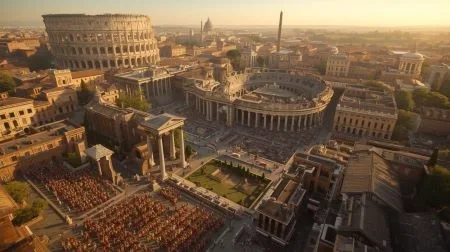
Roman Civilization
Roman Civilization stands as one of the greatest and most influential civilizations in the history of the world, whose legacy in law, governance, architecture, language, engineering, and culture continues to shape modern Western civilization and beyond. Emerging from the small city-state of Rome on the banks of the Tib...
50
Questions
4.9/ 5.0
No reviews yet
4
Learners
100% Free
Untimed & Flexible
About Roman Civilization
Roman Civilization stands as one of the greatest and most influential civilizations in the history of the world, whose legacy in law, governance, architecture, language, engineering, and culture continues to shape modern Western civilization and beyond. Emerging from the small city-state of Rome on the banks of the Tiber River in central Italy around the 8th century BCE, Roman civilization evolved through three major phases — the Roman Kingdom, the Roman Republic, and the Roman Empire — spanning over a thousand years of history. At its height, the Roman Empire encompassed vast territories stretching from the British Isles in the northwest to Mesopotamia in the east and North Africa in the south, governing millions of people across three continents. The Roman Republic, established around 509 BCE, introduced revolutionary concepts of governance including a Senate, elected magistrates, and a system of checks and balances that have profoundly influenced modern democratic and republican political systems. Roman law, codified in the Twelve Tables and later in the Corpus Juris Civilis under Emperor Justinian, formed the foundation of legal systems in many European and Latin American countries. The Roman military was one of the most formidable and disciplined fighting forces of the ancient world, enabling the conquest and administration of vast territories through its highly organized legions, superior tactics, and engineering capabilities. Great Roman leaders such as Julius Caesar, Augustus, Trajan, and Marcus Aurelius expanded and strengthened the empire through military conquest, diplomatic acumen, and administrative reforms. Roman civilization made extraordinary contributions to architecture and engineering that continue to inspire awe and admiration. The Romans pioneered the use of concrete, arches, vaults, and domes, constructing iconic structures such as the Colosseum, the Pantheon, aqueducts, roads, and public baths that demonstrated their mastery of engineering. The Latin language, spoken throughout the empire, gave rise to the Romance languages — including Italian, French, Spanish, Portuguese, and Romanian — and profoundly influenced the vocabulary of English and other European languages. Roman literature, philosophy, and art enriched the cultural heritage of the Western world, with writers such as Virgil, Ovid, Cicero, and Livy leaving timeless literary masterpieces. The decline and fall of the Western Roman Empire in 476 CE marked the end of antiquity and the beginning of the Middle Ages, but the enduring influence of Roman civilization on law, language, religion, governance, and culture remains one of humanity's greatest intellectual and historical legacies.
Roman Civilization - Part 1
Not startedTest your knowledge on the Roman Civilization, including its history, culture, and achievements.
Start
Roman Civilization - Part 2
Not startedTest your knowledge on the Roman Civilization, including its history, culture, and achievements.
Start
No quizzes match your search.
Community feedback
What Learners Say About This Topic
Real reflections from learners who practiced Roman Civilization.
No approved reviews yet. Be the first to share your experience.
Format
Quiz Format & Structure
Each quiz is designed to comprehensively test your knowledge on the selected topic. Here's what you can expect:
All Questions Mandatory
You must answer all questions before submitting — no question can be left blank
Question Types
All questions are multiple choice with 4 options (A, B, C, D) where only one answer is correct
Quiz Length
Quizzes typically contain 10–25 questions depending on the category and difficulty
Equal Weightage
Each question carries equal marks for fair assessment of your knowledge
Review Option
Review all your answers before final submission to catch any mistakes
Question Locked
Cannot change or select another option after selection
Advice
Tips for Success
Read Questions Carefully
Take your time to read each question thoroughly. Since there's no time limit, make sure you understand what's being asked before selecting an answer.
Eliminate Wrong Options
If you're unsure, try eliminating options you know are incorrect. This increases your chances of selecting the right answer.
Trust Your First Instinct
Your first instinct is often correct. While you should be careful, avoid changing answers unless you're certain you made a mistake.
Review Before Submitting
Before hitting submit, review all your answers to ensure you haven't accidentally skipped any questions or made careless mistakes.
Learn from Mistakes
After viewing your results, take time to understand why you got certain questions wrong. This helps improve future performance.
Take Multiple Attempts
Don't worry about getting everything right the first time. Taking quizzes multiple times helps reinforce your knowledge.
Related topics
More in Civilizations
Explore other sub topics and keep practicing across the subject.
world civilization
Discover the rise and development of ancient and modern civilizations across continents. S...
View quizzes
Mayan Civilization
Explore the ancient Mayan civilization of Central America, known for astronomy, mathematic...
View quizzes
Aztec Civilization
Learn about the Aztec Empire of Mesoamerica, known for its capital Tenochtitlan, military...
View quizzes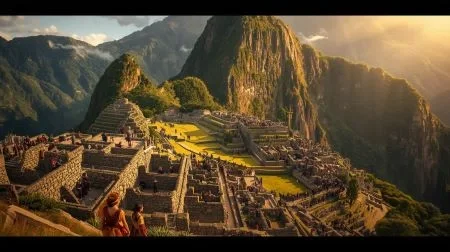
Incan Civilization
Learn about the powerful Incan Empire of South America, known for advanced engineering, ag...
View quizzes